0
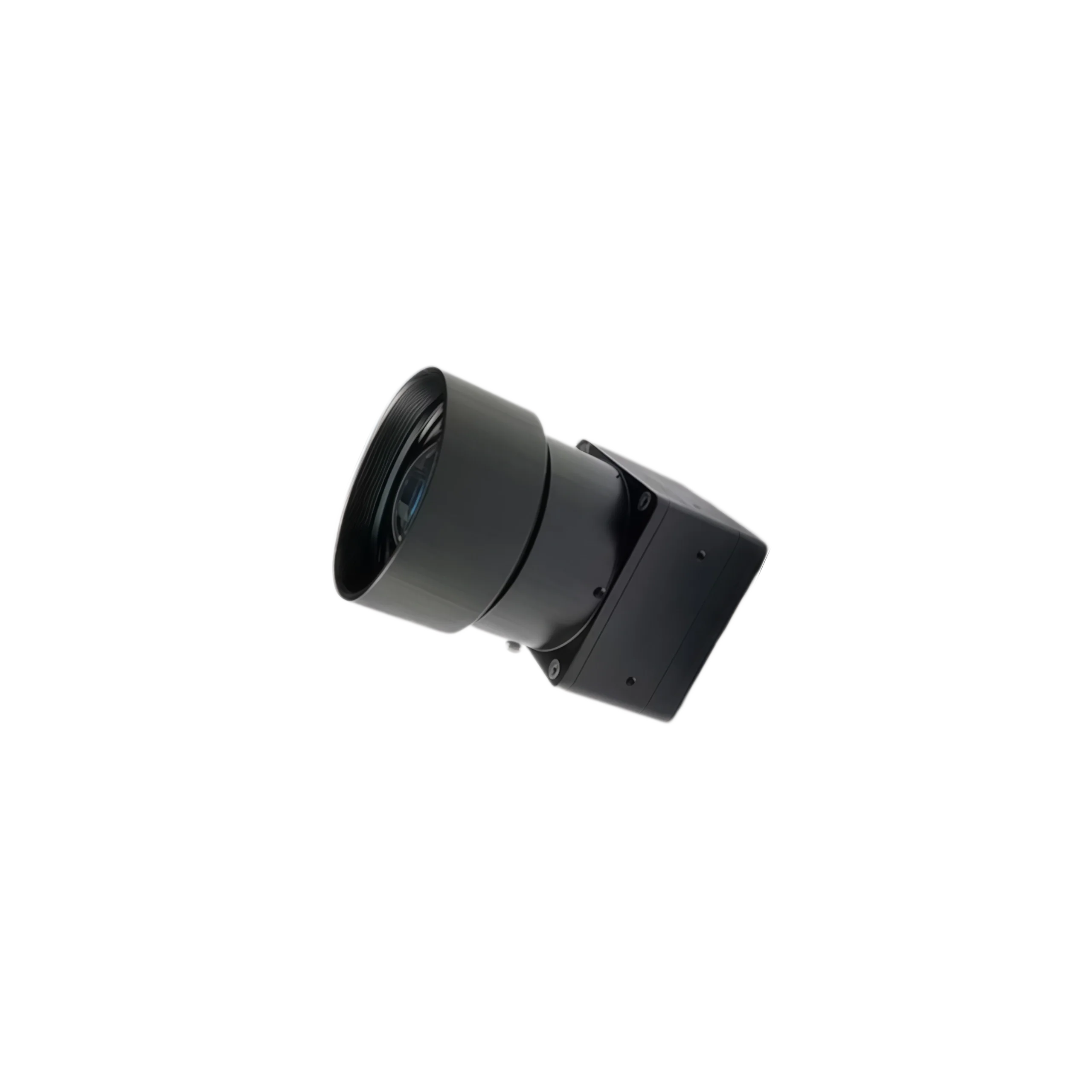
NLIR1280ES High-Performance Uncooled Thermal Camera Modules
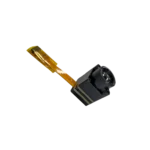
NLIR640 | 640x512 Uncooled Thermal Camera Module
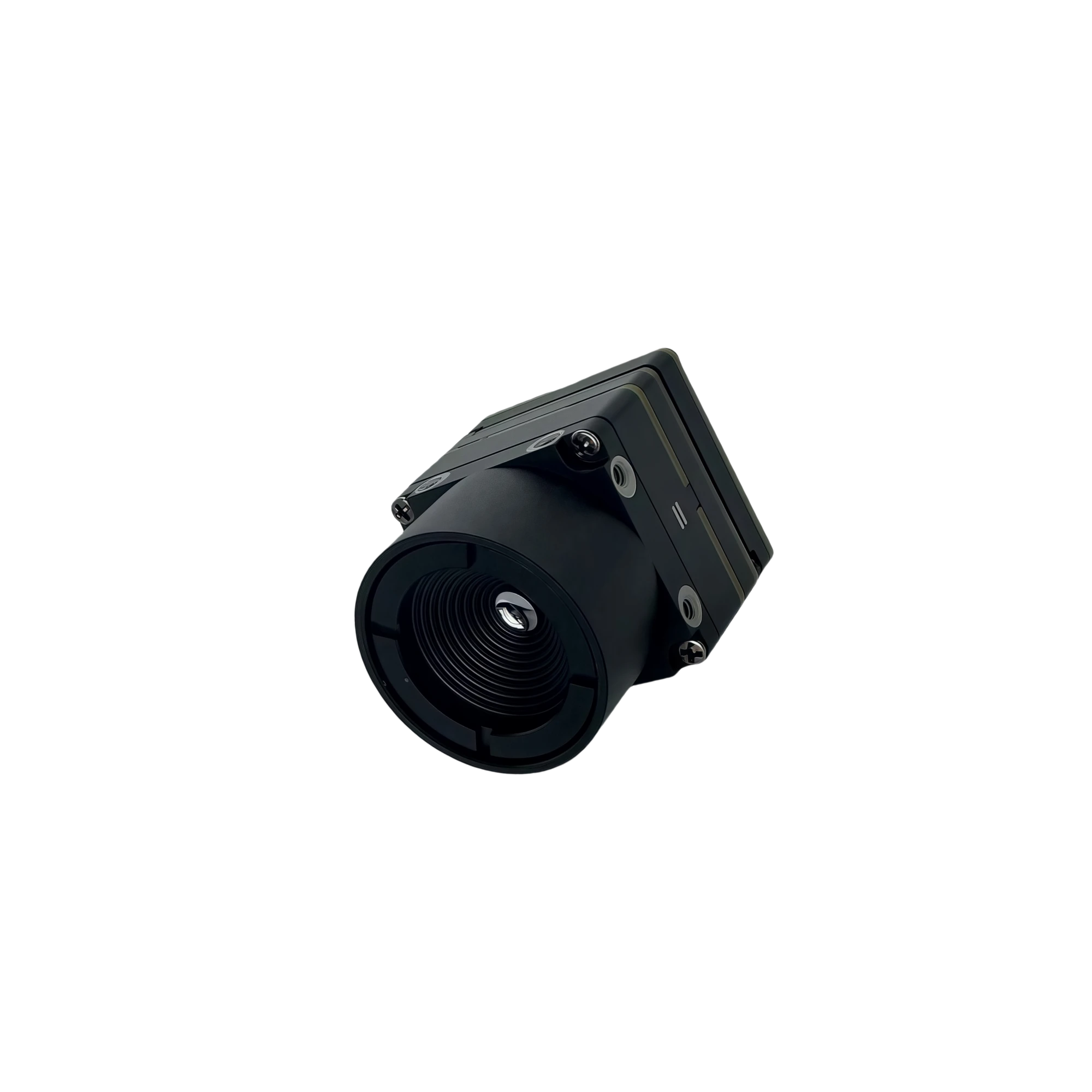
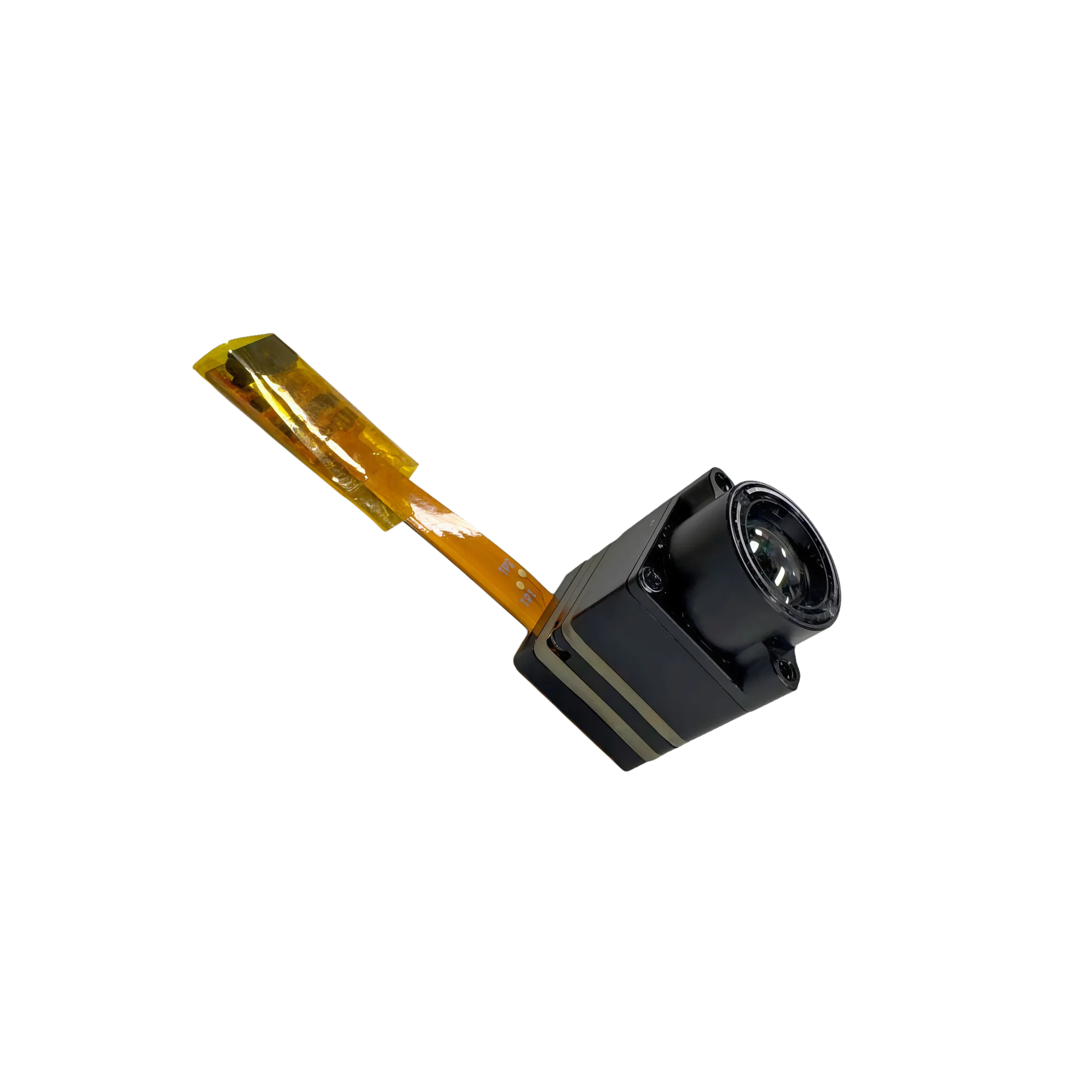
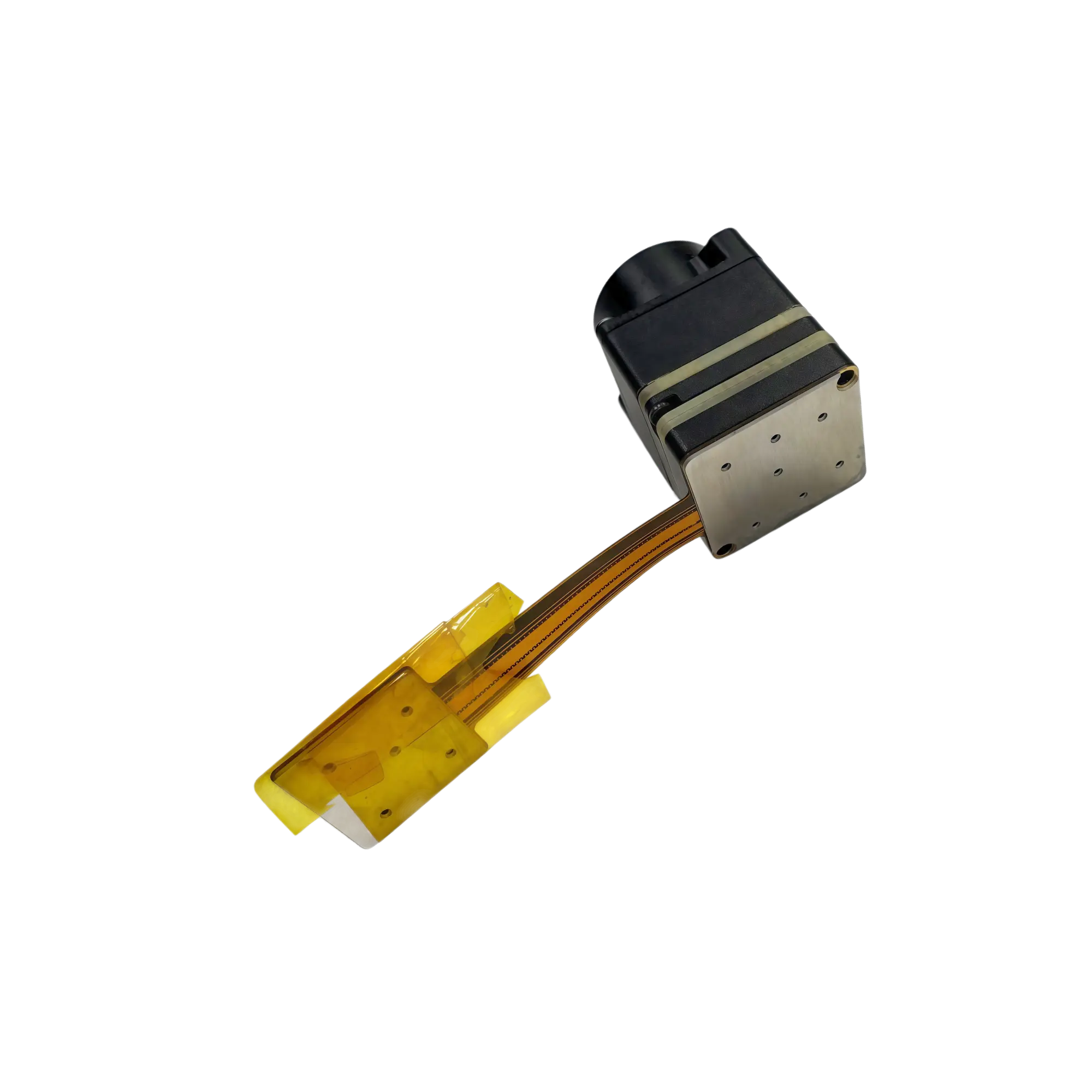
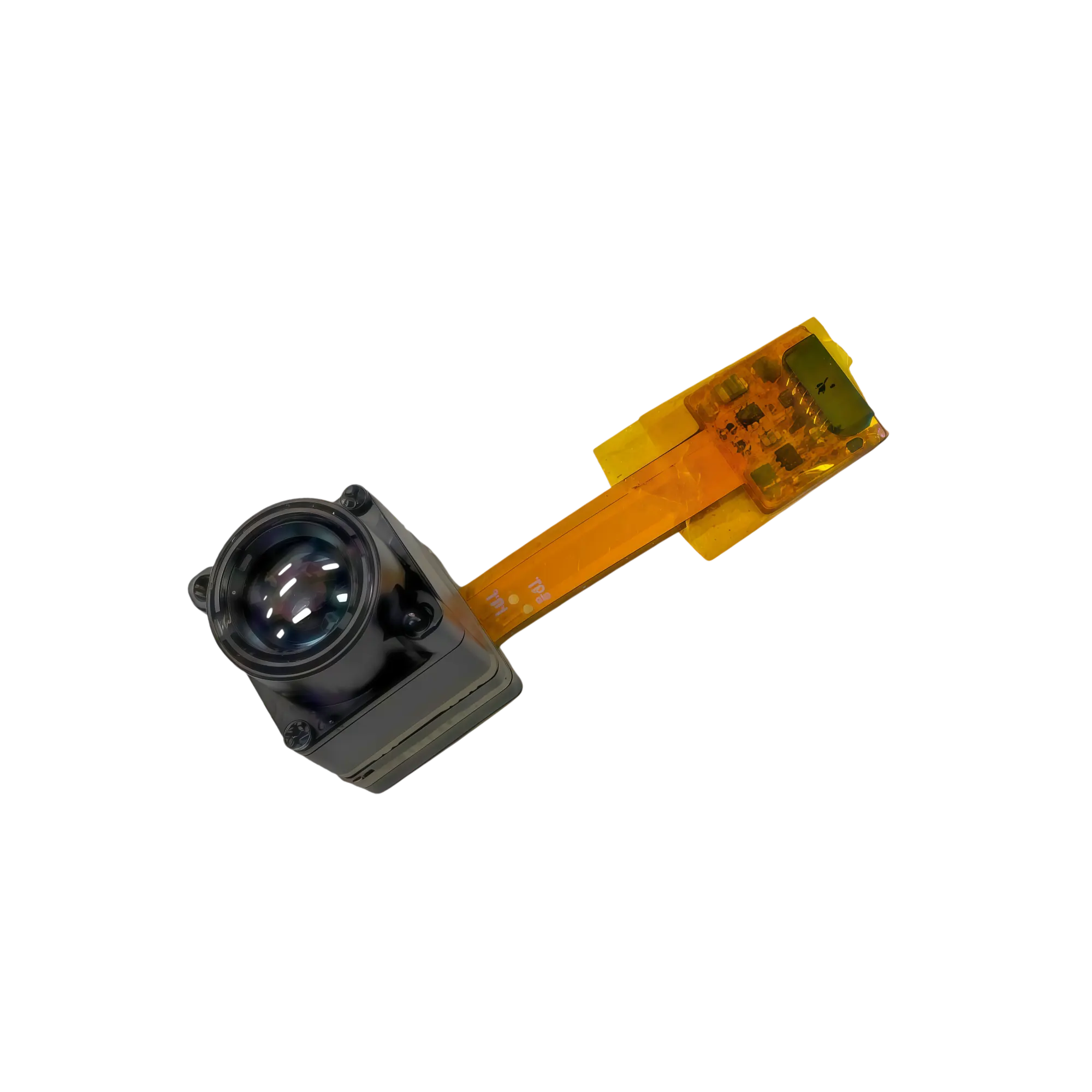
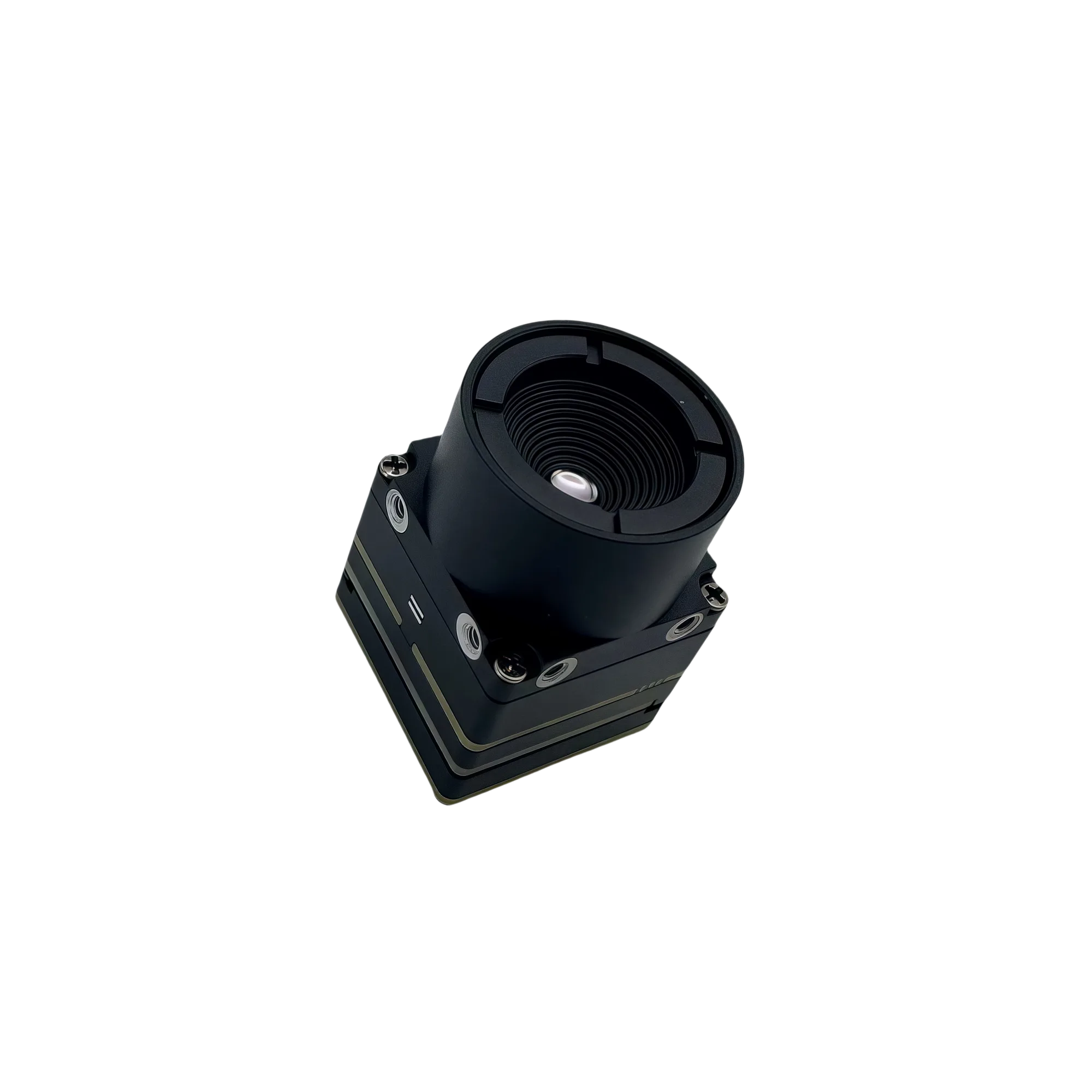
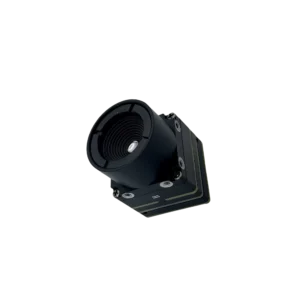
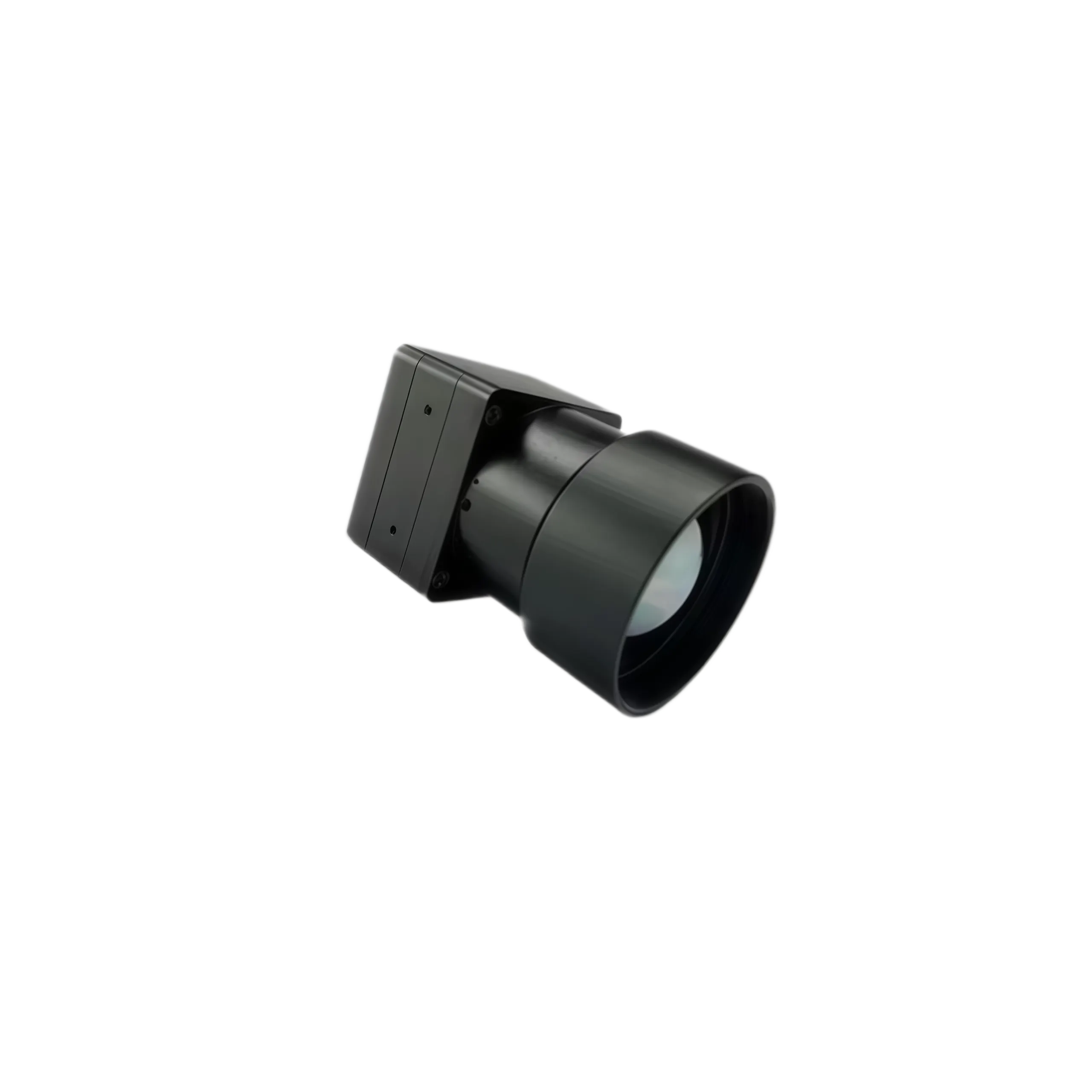
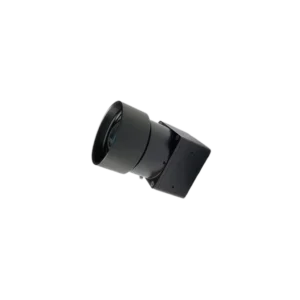
NLIR640T Thermal Core <4g
The NLIR640T ultra-miniature uncooled infrared engine completely redefines industry standards for SWaP (Size, Weight, and Power) optimization. Delivering high-resolution 640×512 thermal imaging in an astonishingly compact form factor, this thermal core is precision-engineered for payload-constrained airborne and portable platforms.
- Extreme SWaP Profile: Weighs under 4g with a 13×13×12.1mm footprint for micro-integration.
- Next-Gen 8μm Pixel Pitch: Ensures unparalleled radiometric fidelity and detail capture.
- Ultra-Low Power Consumption: Operates at ≤0.4W, maximizing endurance for wireless systems.
I. NLIR640T Thermal Core | Sub-4g Micro-Payload Infrared Engine
Ultra-Miniature 640×512 Architecture for Weight-Restricted Platforms
Representing a breakthrough in miniaturized radiometric engineering, the NLIR640T thermal core operates as a highly advanced uncooled infrared module tailored for the most demanding structural and power-restricted environments. Utilizing an advanced 8μm pixel pitch long-wave infrared (LWIR) detector, it delivers a massive 640×512 planar array scale within a microscopic footprint. This unit entirely disrupts legacy SWaP constraints, enabling high-definition thermal telemetry for systems where every gram matters, such as micro UAV pods and first-person view (FPV) drones.
Operating with a typical power draw of merely 0.4W, it dramatically extends the operational endurance of battery-dependent portable systems. The integration of Shutterless Non-Uniformity Correction (NUC) technology guarantees uninterrupted 60Hz video streaming, eliminating mechanical lag and ensuring fluid target tracking. Furthermore, advanced digital filter noise reduction and detail enhancement algorithms provide superior clarity in degraded visual environments. By utilizing a standardized Hirose 30-pin connector, hardware integrators gain immediate access to versatile digital video pipelines, including MIPI and LVCMOS, making this thermal core the definitive foundation for iterative development in next-generation compact electro-optical systems.
II. Engineering Advantages of the NLIR640T Thermal Core
- Unprecedented SWaP Integration: Measuring just 13×13×12.1mm (bare core) and weighing <4g, it perfectly adapts to extreme structural load requirements without compromising on resolution.
- High-Density 8μm Imaging: The 640×512 array captures finer spatial details, supported by a rapid 60Hz frame rate for artifact-free motion tracking.
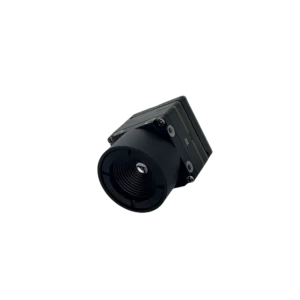
- Athermalized Optical Versatility: Compatible with ultra-lightweight 6.1mm, 8.7mm, and 11mm F1.0 lenses that maintain focus stability across temperature shifts without mechanical thermal compensation.
- Endurance-Optimized Power Circuitry: With typical consumption at ≤0.4W and multi-channel voltage compatibility, it excels in battery-operated and wireless deployments.
- Intelligent Shutterless Processing: Deploys cutting-edge digital noise reduction and DDE (Digital Detail Enhancement) for uninterrupted, crisp imaging.
III. Strategic Deployment Scenarios for the 8μm Thermal Core
UAVs, Micro Pods, and FPV Systems
The sub-4g profile prevents excessive payload strain on small-scale multi-rotors and FPV drones. The 60Hz refresh rate supports high-speed aerial reconnaissance, power line inspection, and forestry surveillance with absolute structural efficiency.
Portable Security and Night Vision Gear
Fits seamlessly into handheld thermal imagers and helmet-mounted goggles. The ultra-low power demand (<0.4W) drastically improves battery life for night patrols, border security, and emergency rescue operations in zero-light conditions.
Industrial Testing & Smart Consumer Devices
Integrates effortlessly into small-scale mechanical fault detectors, pipeline inspection tools, and emerging consumer smart glasses, bringing industrial-grade 8-14μm LWIR thermal imaging to everyday compact hardware.
IV. NLIR640T Technical Specification Matrix
| Parameter Category | Technical Specification |
|---|---|
| Weight | <4g (Excluding interface board and optics) |
| Core Dimensions | 13mm × 13mm × 12.1mm (Bare core); 13×13×18.8mm (With 6.1mm lens) |
| Operating Temperature | -40℃ to +70℃ |
| Storage Temperature | -45℃ to +80℃ |
| Humidity Tolerance | 5%~95%, Non-condensing |
| Vibration Stability | 2g, Random Vibration, 3 Axes 6 Directions |
| Shock Resistance | 6g, 2ms, Haversine Wave, 3 Axes 6 Directions |
| Environmental Certification | RoHS2.0 Compliant |
| Detector Type | Vanadium Oxide (VOx) Uncooled Infrared Focal Plane Detector |
| Resolution & Pixel Pitch | 640×512 Array | 8μm Pixel Pitch |
| Thermal Time Constant | <12ms |
| Response Spectrum | 8~14μm (LWIR) |
| Thermal Sensitivity (NETD) | ≤40mK @25℃, F#1.0 |
| Frame Rate | 60Hz Native |
| Image Processing Engine | Shutterless NUC, Digital Filter Noise Reduction, Digital Detail Enhancement (DDE) |
| Image Adjustments | Brightness & Contrast (Manual/Auto) |
| Polarity & Pseudo Color | Black Hot / White Hot | Pseudo Color Supported(1) |
| Image Mirroring | Vertical / Horizontal / Diagonal |
Optical Specifications & Objective Lens Options
| Focal Length / F# | FOV (H×V) | IFOV | Detection / Recognition / Identification Range | Lens + Flange Weight |
|---|---|---|---|---|
| 6.1mm F1.0 Athermal | 46.6° × 37.6° | 1.31mrad | 1.1km / 0.25km / 0.17km | 10.5g ±5% |
| 8.7mm F1.0 Athermal | 40.0° × 32.2° | 0.92mrad | 1.5km / 0.37km / 0.19km | 15.2g ±5% |
| 11mm F1.0 Athermal | 24.9° × 20.0° | 0.73mrad | 2.0km / 0.50km / 0.25km | 25.0g ±5% |
(1) Detection, recognition, and identification ranges are estimated against standard pedestrian targets (1.8×0.5×0.3m) per Johnson’s Criteria.
V. Advanced Integration & Electrical Interface
- Typical Core Power Consumption: Extremely low at ≤0.4W (tested at 25℃, excluding interface board).
- Multi-Channel Supply: Requires MAIN_POWER (3.8V~5V), VDD1V8 (1.8V), and VDD3V3 (3.3V).
- Power Noise Tolerance: Engineered to handle a maximum of 10mVP-P noise on the supply lines.
- Digital Output Logic: Allows hardware selection among 8Bit LVCMOS, BT656, or 2-lane MIPI via a unified 30-pin hub.
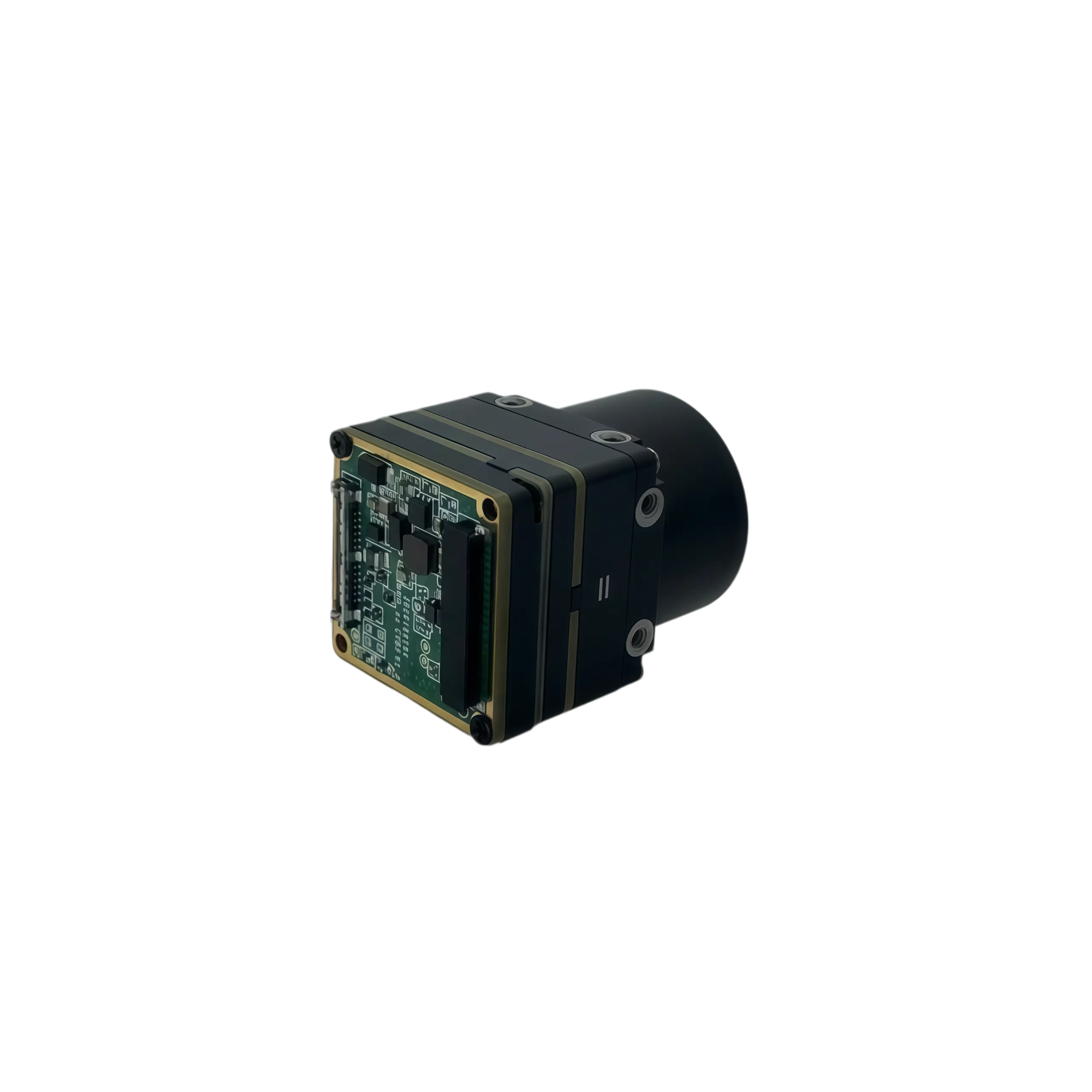
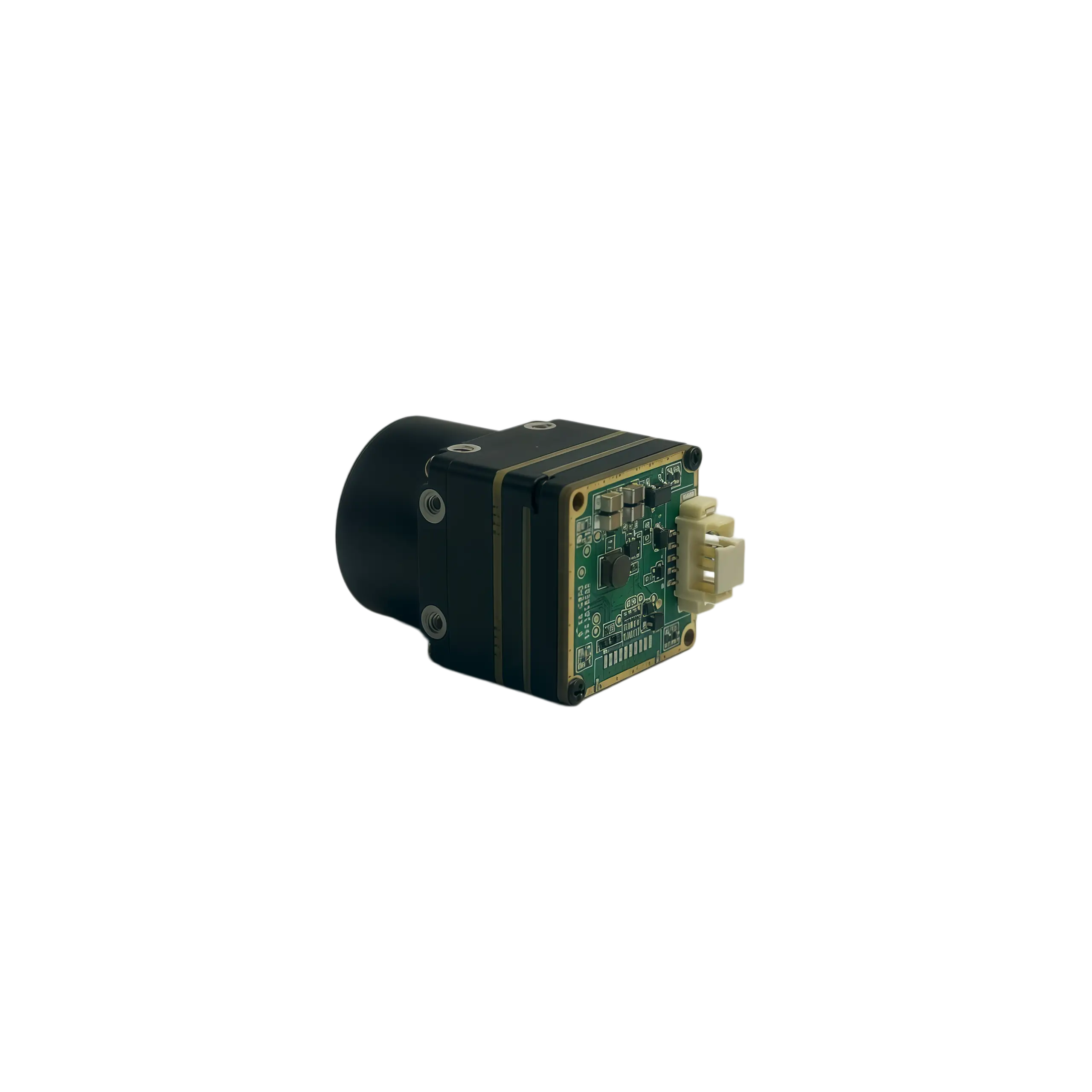
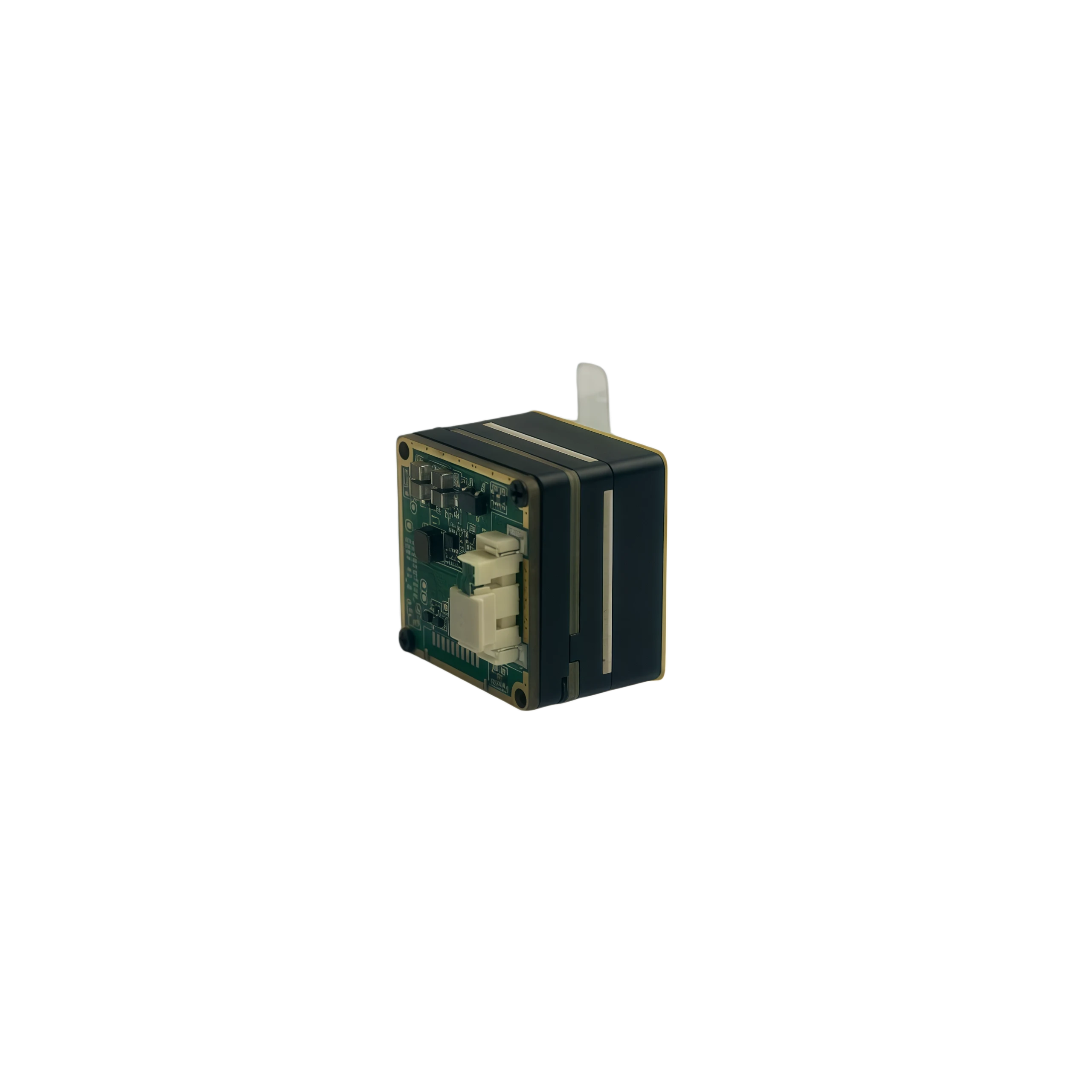
The module connects securely to baseboards via a high-density Hirose 30-pin connector. The standardized factory interface configuration ensures high operational stability without the immediate need for bulky extended components.
| Interface Category | Signal/Protocol Type | Technical Description |
|---|---|---|
| Main Power Supply | 3.8V ~ 5.0V | Primary voltage input; strict power-on sequence standardization applies. |
| Logic Power Supply | 1.8V / 3.3V | VDD1V8 and VDD3V3 dedicated rails for digital processing stability. |
| Digital Video Out | LVCMOS / BT656 / MIPI | 8-Bit LVCMOS, standard BT656, or 2-lane MIPI (Integrator selects one of three). |
| USB Output | USB 2.0 | Available in specific versions for rapid plug-and-play data acquisition. |
| Analog Video Out | CVBS (PAL/NTSC 720H) | Requires external driver buffer; LDO powers the buffer. |
| System Control In | RESET_IN | Hardware master reset pin; functions via active-low reset trigger architecture. |
| Control Interface | UART (1.8V) | Default asynchronous serial control; customizable IIC (1.8V) available upon request. |
VI. Mechanical and Optical Interface Specifications for Micro Thermal Core
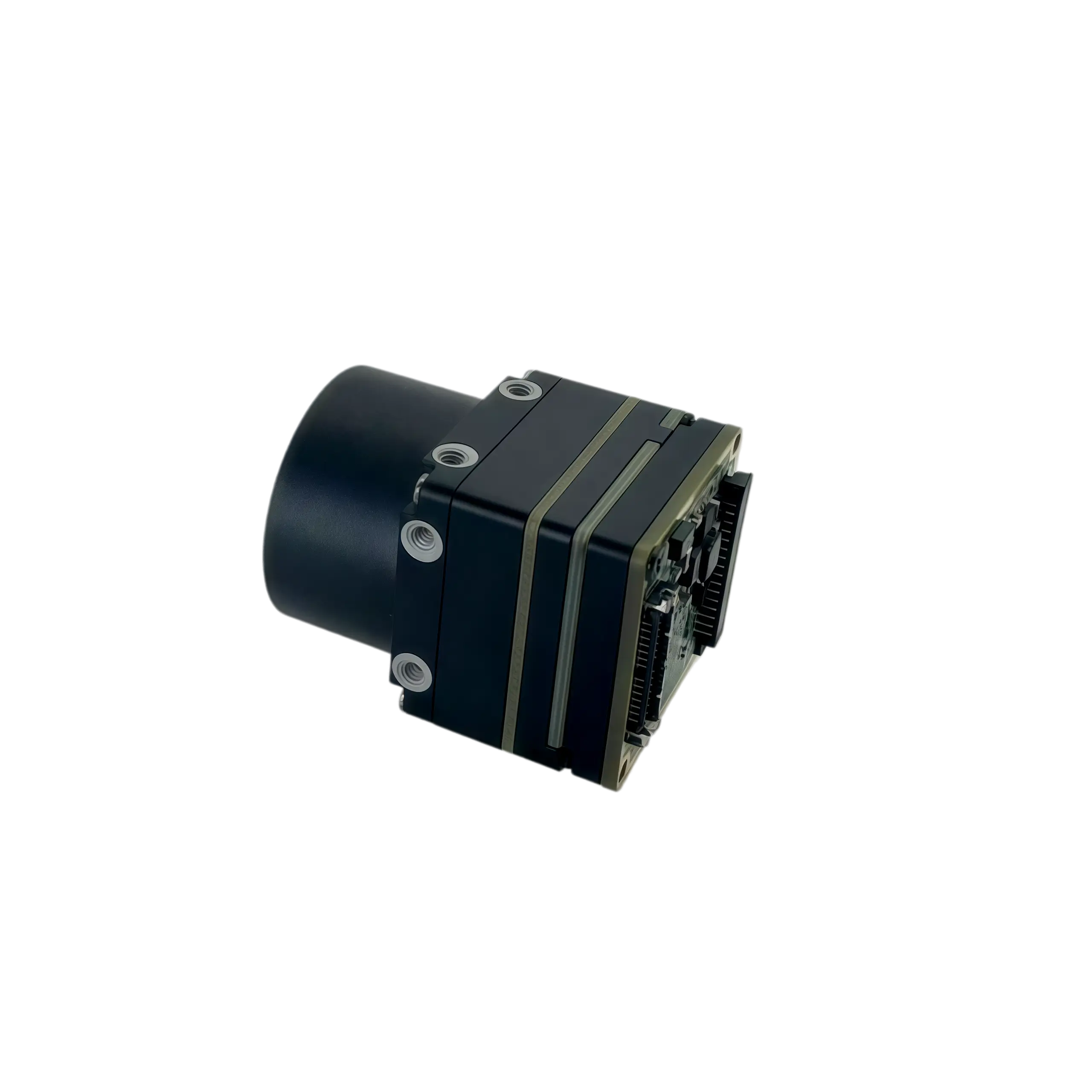
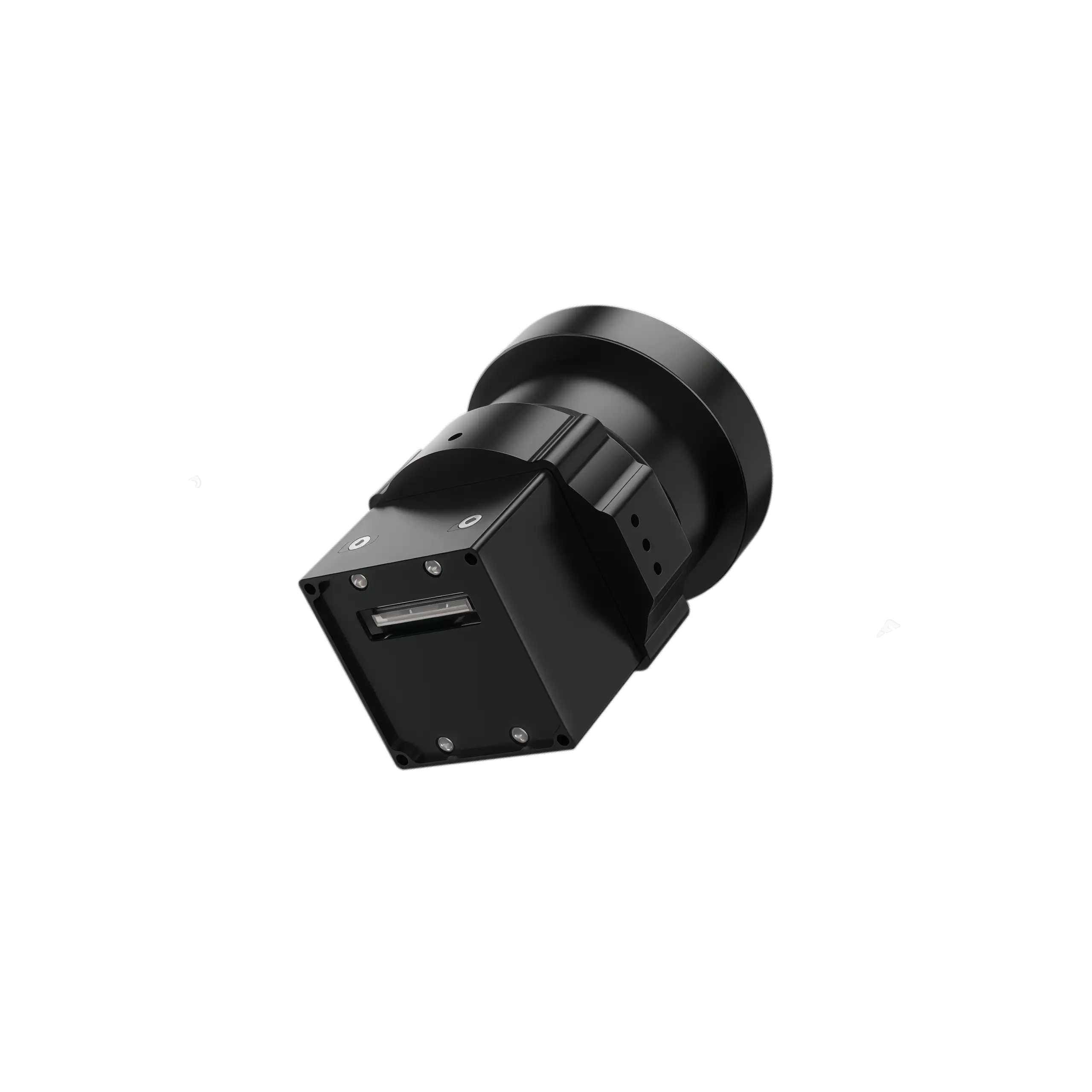
The NLIR640T thermal core features a highly miniaturized chassis designed for direct integration into micro-gimbals and PCB mainboards. The optical mount securely threads the athermalized lens without disrupting the internal 8μm focal plane array calibration.
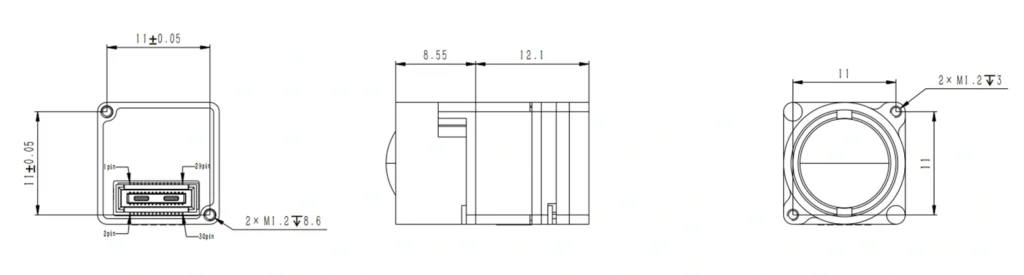
Physical dimensions, lens protrusion depth, and M1.2 mounting thread layout for the 13x13mm core.
Mounting Layout: Front face secures via 2 × M1.2 threaded holes (depth 8.6mm); Rear face secures via 2 × M1.2 threaded holes (depth 3mm).
- The bottom layout hosts the Hirose 30-pin receptacle, ensuring minimal Z-axis buildup when mated to the carrier board.
- Mechanical dimensions scale up from 12.1mm depth (bare core) to 18.8mm depth when the 6.1mm F1.0 athermal lens is fully seated.
- The internal casing acts as a primary heat sink, efficiently dissipating the ≤0.4W thermal load to preserve the ≤40mK NETD sensitivity.
VII. Thermal Core Universal Adaptability
The NLIR640T thermal core represents the ultimate intersection of uncompromised resolution and extreme miniaturization. By consolidating a 640×512 8μm detector into a 4-gram package, it transcends traditional hardware limitations. Whether serving as the visual cortex for an agile FPV racing drone, an invisible thermal sensor within smart consumer wearables, or the primary telemetry node in a handheld security device, its diverse SDK solutions and multi-protocol video pipelines (MIPI, LVCMOS, BT656) ensure rapid, frictionless integration across any compact system topology using advanced uncooled thermal camera modules.
Additional information
| Weight | 6098603 lbs |
|---|
VIII. NTRON Precision Optoelectronic Technology & Systems


NLIR256 | Ultra-Low Power Infrared Thermal Module
VIEW SPECSRes.256×192Pitch12μmPWR< 0.35WDim./Wt.< 7g
NLIR384 | 384×288 Balanced Industrial Thermal Module
VIEW SPECSRes.384x288Pitch12μmPWR< 0.42WDim./Wt.< 7gNLIR1280L | Thermal Camera Cores for UAV Payloads
VIEW SPECSRes.1280 × 1024Pitch12μmPWR~1.1WDim./Wt.24.5gNLIR1280ES High-Performance Uncooled Thermal Camera Modules
VIEW SPECSRes.1280×1024Pitch12μmPWR≤ 5.0WDim./Wt.170±10gNLIR640 | 640×512 Uncooled Thermal Camera Module
VIEW SPECSRes.640×512Pitch12μmPWR< 0.7WDim./Wt.< 8.6g