0
NTLTDC160A 160mJ High Energy Laser Target Designator System
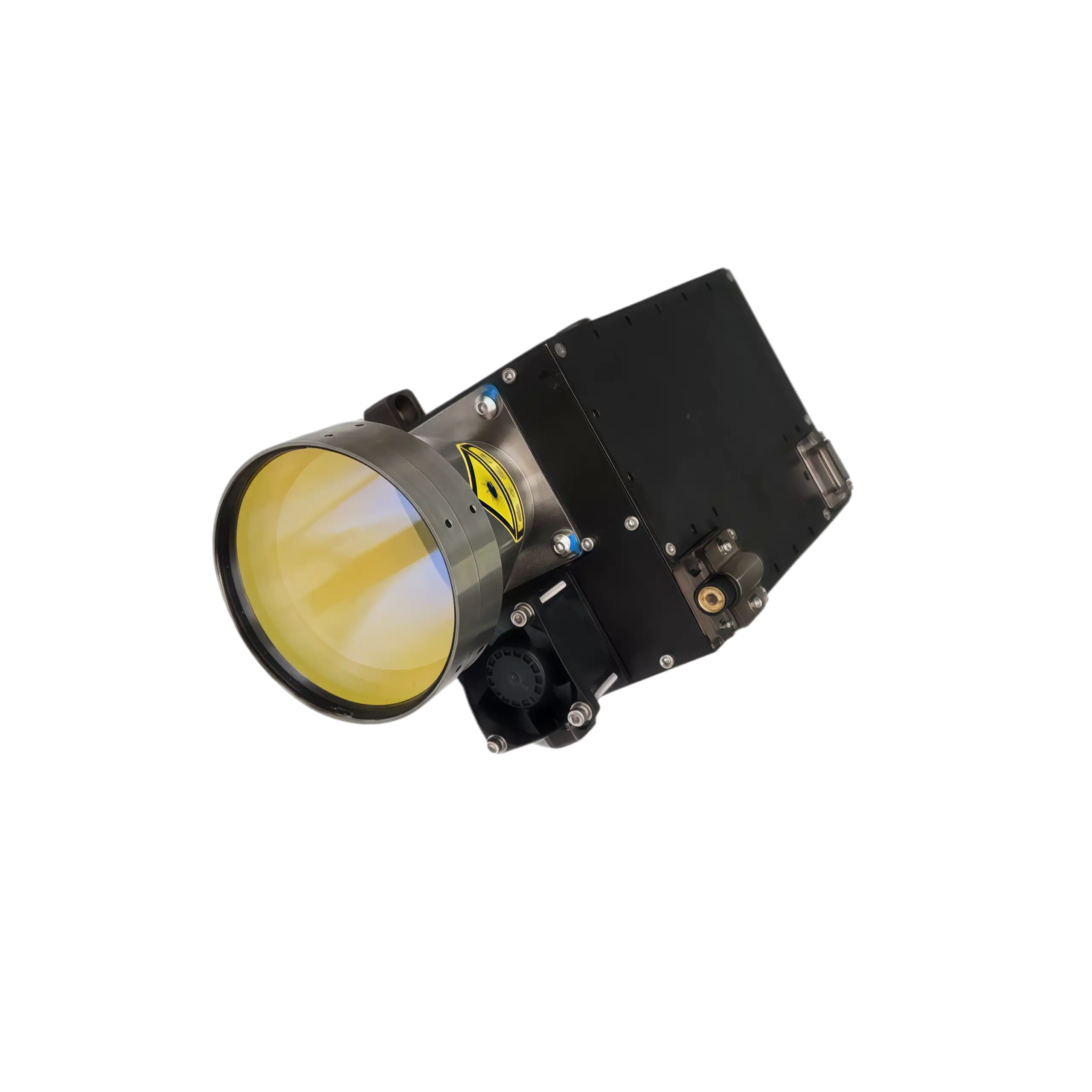
NTLTDC80A 80mJ High Energy Laser Target Designator Module
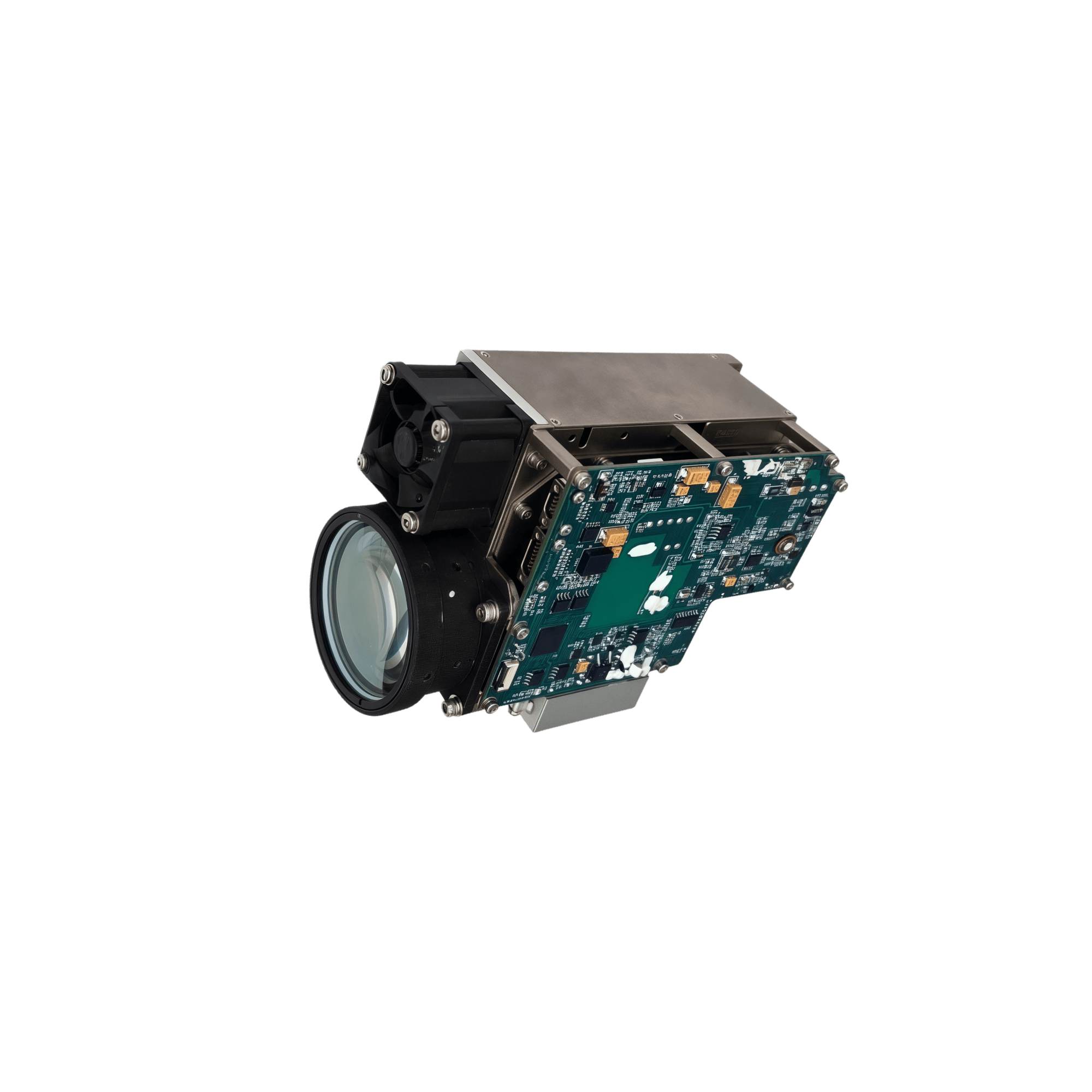
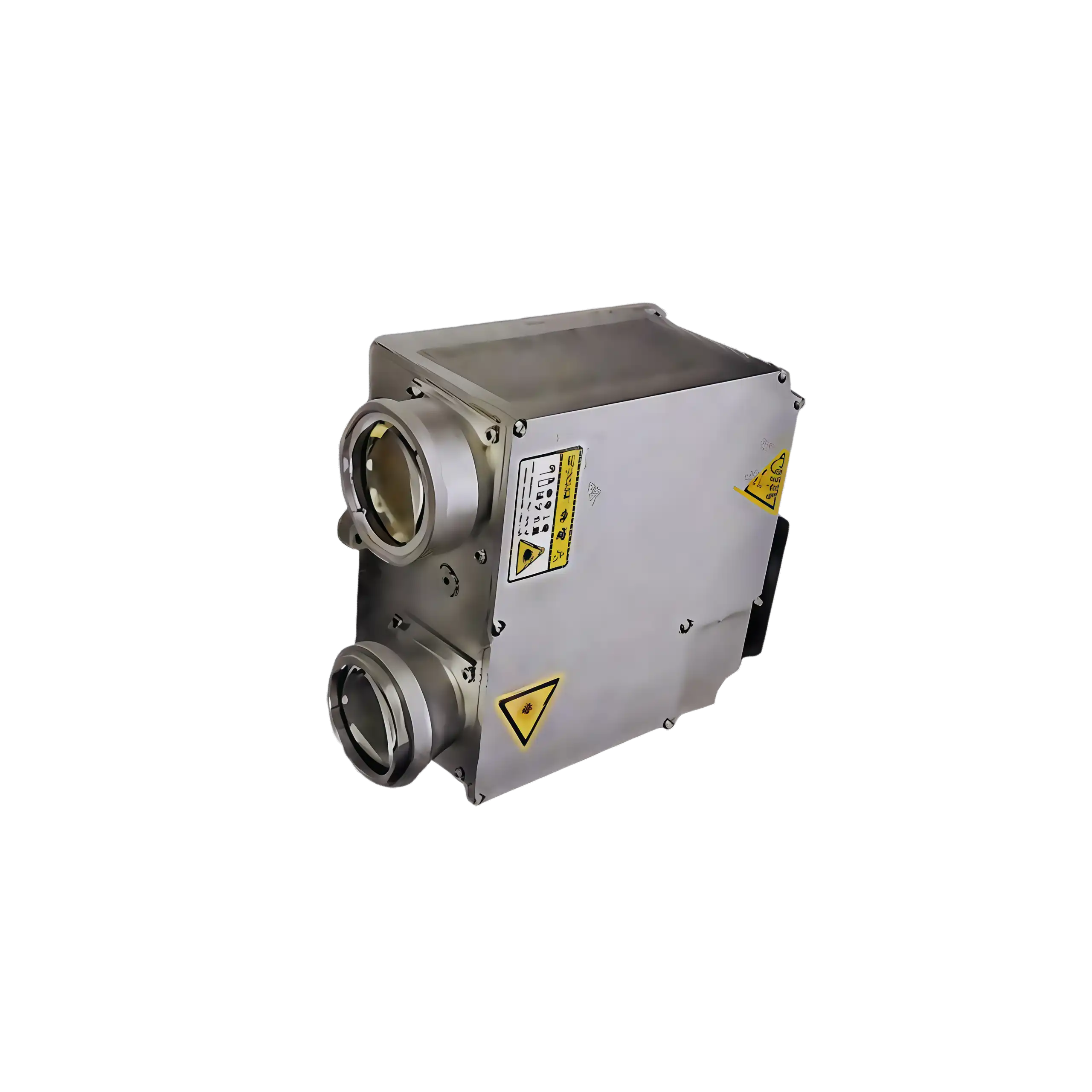
NTLTDC40A 40mJ Solid-State Non-Temperature Controlled Laser Target Designator
The NTRON NTLTDC40A introduces an ultra-compact, fluidless solid-state assembly tailored for high-frequency synchronization and distance detection within constrained airborne gimbal structures. Developed for straightforward system-level architecture integration, this module unifies precise long-range measurement and real-time programmable targeting tracking within an exceptionally low-mass optomechanical housing.
- Sensing Capability: 25,000m Ranging and ≥4,000m Illumination Tracking Probability
- Structural Alignment: Secure axis stability ≤0.1mrad matched against severe structural vibration profiles
- Thermal Technology: NT-DPSSL solid-state emitter allowing plug-and-play instant startup with zero pre-heating
- Operational Lifespan: High-reliability engineering with a calculated 1,800-hour Mean Time Between Failures
I. 1064nm Solid-State Emitter & 40mJ Laser Target Designator Module
Ultra-compact 1064nm optoelectronic sub-system optimized for rapid-deployment multi-sensor pod architectures.
The NTRON NTLTDC40A functions as an ultra-compact, dual-function 1064nm laser source engineered specifically as a high precision laser device for optoelectronic system-level integration. By integrating our patented Non-Thermally Controlled Diode-Pumped Solid-State Laser (NT-DPSSL) cavity, this high-integrity 40mj laser target designator module packs a heavy ≥40mJ pulse energy into a palm-sized frame, effectively compressing total housing mass to an incredible ≤0.535kg to eliminate heavy cooling fluid constraints inside constrained optoelectronic networks.
Operating with zero pre-heating delay, this ready-to-integrate 40mj laser target designator core engine serves simultaneously as a long-range distance sensor and an externally synchronized encoded target tracking transmitter. Tested to maintain absolute structural stability under extreme high-low temperature swings, it serves as a flexible, non-contact measurement device that provides a massive boost to data refresh rates across distributed remote monitoring solutions, drone surveying equipment, and rapid-deployment multi-sensor payloads.
II. SWaP-C Constraints Optimization for Non-Temperature Controlled Laser Cavity
- Thermal Drift Elimination: This 40mj laser target designator module architecture relies on temperature-control-free diode-pumped solid-state mechanics to compress power fluctuation to ≤±8% over severe environmental boundaries from -40°C to +60°C without active chilling hardware.
- Dual-Mode Optical Telemetry: Merges automated distance detection (extending from 300m up to 25,000m with a strict ±2m ranging accuracy) with a continuous 5Hz measurement sequence and a highly stable 20Hz irradiation base frequency.
- Jitter-Free Temporal Precision: Engineered with an internal encoding accuracy of ≤0.2μs and a laser coding temporal accuracy of ≤±1μs to ensure zero timing drift during complex multi-station cross-validation loops.
- Ruggedized Structural Ingress: Outfitted inside a sealed IP67 hermetic enclosure designed to endure storage environments from -55°C to +70°C and maximum flight-load altitudes up to 4,500m.
III. Drone Surveying Equipment & Autonomous Robotics Navigation Solutions
Miniature Drone Gimbals & Portable Surveying Pods
The Integration Bottleneck: Traditional uncooled laser systems are too heavy, causing drone surveying equipment and gimbal drive motors to overheat, lag, and drain lithium payload batteries rapidly during long-range tracking.
The NTLTDC40A Fix: Measuring a compact 103mm × 89.5mm × 50.5mm, this lightweight 40mj laser target designator core frees up valuable spatial margin without sacrificing pulse stability. Engineered as an essential component for drone navigation and airborne multi-sensor survey pods, it functions perfectly under a 4,500m ceiling or severe flight turbulence, securing an uninterrupted ≥4,000m (4 km) encoded illumination range to lock onto target tracking coordinates instantly.
Automated Robotics Navigation & Remote Infrastructure Inspection
The Inspection Challenge: Relying on radar or generic optics for industrial laser measurement under thick dust, mist, or atmospheric turbulence often leads to blind spots and signal dropout during automated distance detection loops.
The NTLTDC40A Fix: Operating as a fully automated, non-contact measurement device, the laser ranging module delivers outstanding precision across a massive 300m to 25,000m tracking range—even when evaluating low-reflectance targets. Backed by an absolute ±2m accuracy rating and optimized for machine vision integration, it ensures jitter-free spatial mapping for autonomous robotics navigation, mining rovers, utility grid inspection loops, and laser rangefinder for robotics platforms.
IV. NTLTDC40A Technical Specification Matrix & Hardware Parameters
| Technical Parameter | Specification Value / Limit Conditions |
|---|---|
| Laser Center Wavelength | 1064 ± 3 nm |
| Single Pulse Energy | ≥ 40 mJ |
| Ranging Performance Limits | 300 m to 25,000 m |
| Distance Measuring Accuracy | ± 2 m |
| Measurement Success Probability | 98% |
| Operational Verification Baseline | Visibility ≥23 km, flight altitude 6 km, target reflectance 0.2 |
| Pulse Width Range | 15 ± 5 ns |
| Laser Beam Divergence | ≤ 0.4 mrad |
| Optical Axis Alignment Stability | ≤ 0.1 mrad |
| Ranging Update Frequency | 5 Hz Output |
| Continuous Ranging Duration | ≥ 1 min (at 5 Hz Continuous Output) |
| Base Irradiation Frequency | 20 Hz |
| Laser Illumination Range bounds | ≥ 4,000 m (4 km) |
| Laser Coding Temporal Accuracy | ≤ ±1 μs |
| Internal Encoding Accuracy | ≤ 0.2 μs |
| Pre-programmed Code Storage | 8 Sets of Fixed-Frequency Reserved Encoding Modes |
| Energy Stability Profile | ≤ ±8% Energy Fluctuation (Full Temperature Range) |
| Total Mechanical Dimensions | 103 mm × 89.5 mm × 50.5 mm |
| Total Housing Mass | ≤ 0.535 kg |
| Integrated Optical Aperture | Common Aperture Architecture |
| Mounting Parallelism Limit | ≤ 0.6 mrad (Normal to Datum Reference Surface) |
| Environmental IP Seal Class | IP67 Dust and Water Immersion Shielding |
| Operating Temperature Boundaries | -40°C to +60°C Extreme Environment Limit |
| Storage Temperature Limits | -55°C to +70°C |
| Maximum Operational Altitude | 4,500 m (GJB150.xA-2009 Compliant) |
| Vibration Structural Resistance | Compliant with GJB150.xA-2009 Vibration Test Standards |
| Mechanical Shock Reliability | Compliant with GJB150.xA-2009 Shock Test Standards |
| Average Power Consumption | Avg ≤ 80 W (At Maximum Beam Divergence Profile) |
| Operating Voltage Supply | DC 28V (Operational Range: 22V to 32V) |
| Digital Communication Interface | RS422 Standard bus link |
| Serial Baud Rate Settings | 115,200 bps |
| External Sync Connection | RS-422 Differential Level Signal Input |
| Mean Time Between Failures (MTBF) | 1,800 Hours |
| Built-In Test (BIT) Measures | Power-on, Startup, and Periodic Real-Time Diagnostic Fault Reporting |
| Irradiation Duration Mode A | Single cycle: ≥60s (interval: 60s, 2 cycles) |
| Irradiation Duration Mode B | Single cycle: ≥17s (interval: 10s, 8 cycles) |
| Re-irradiation Cool Down Limit | Re-irradiation time interval require ≥30 minutes |
V. Industrial Laser Measurement Sensor & Electrical Interface
The electrical interface functions under a standardized vibration-certified grid connection, built to withstand continuous peak current spikes during 20Hz base irradiation cycles. Power regulation and signal transmission maintain zero data-drop across complete operational voltage drops, allowing plug-and-play synchronization with generic aircraft bus layouts.
- Input Voltage Supply: DC 28V nominal with an uncompromised operation range spanning 22V to 32V.
- Power Expenditure Baseline: Average consumption remains bounded below ≤80W during full divergence pulse firing.
- Command Link Topology: Full duplex RS422 standard serial network running at a native 115,200 bps baud rate.
- External Synchronization Input: Low-latency RS-422 differential level signal for absolute clock timing with remote receptors.
Interface Connector Specification: High-density micro-d-subminiature connector integrated directly into the upper electronics block housing for optimal shielding against electromagnetic interference (EMI).
| Pin Assignment | Signal Name | Functional Description |
|---|---|---|
| Pin 1 | VCC_28V | Main Power Input Line (DC 22V–32V) |
| Pin 2 | GND_POWER | Power Return Ground Line |
| Pin 3 | RS422_RX+ | Differential Command Receive Input Plus |
| Pin 4 | RS422_RX- | Differential Command Receive Input Minus |
| Pin 5 | RS422_TX+ | Differential Telemetry Transmit Output Plus |
| Pin 6 | RS422_TX- | Differential Telemetry Transmit Output Minus |
| Pin 7 | SYNC_EXT+ | External RS-422 Synchronization Differential Input + |
| Pin 8 | SYNC_EXT- | External RS-422 Synchronization Differential Input – |
| Pin 9 | GND_SIGNAL | Dedicated Digital Signal Reference Ground |
VI. Mechanical Drawings and Optical Interface Specifications for Laser Distance Modules
The mechanical framework for the NTLTDC40A utilizes an ultra-low-profile chassis milled entirely from an alloy block, maintaining a hard mounting volume of 103mm × 89.5mm × 50.5mm. This allows installation inside space-critical payloads where traditional cooled transmitters fail due to dimensional restrictions.
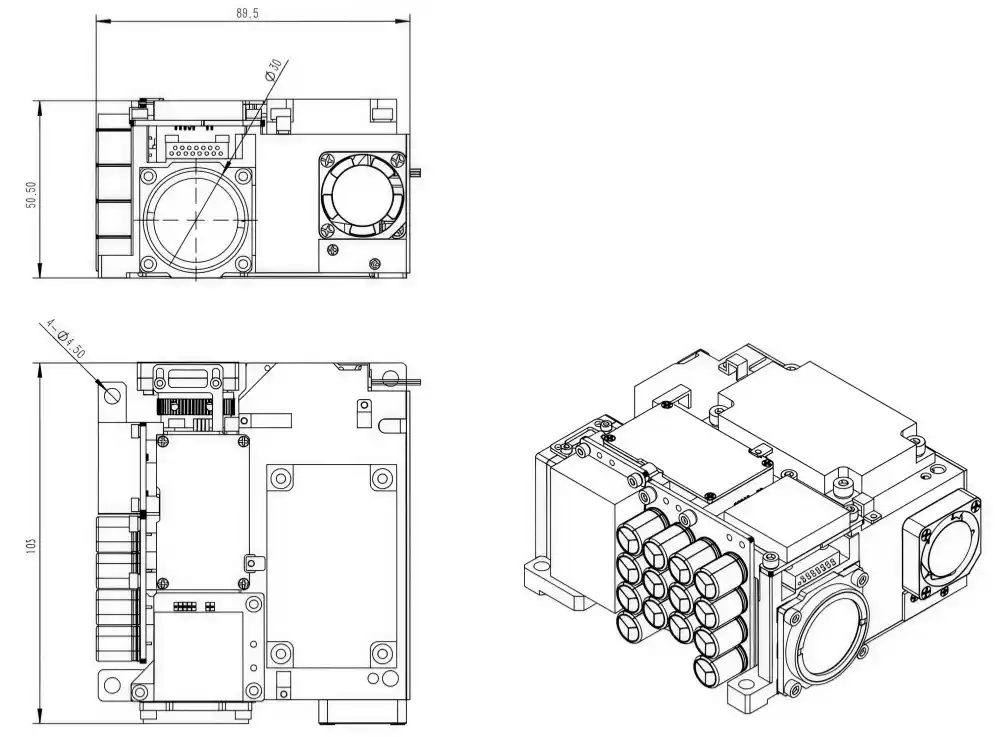
Effective Aperture: Common Aperture Transmit/Receive Optical Window with Integrated Ø30mm Exit Window | Mounting Reference: Precision machined alignment base with 4 × mounting holes normal to datum reference surface.
- Optical Window Orientation: Integrated single common-aperture multi-layer window that isolates high-energy emission while focusing returning 1064nm photons onto the internal avalanche reception sensor.
- Structural Parallelism Baseline: Rigid frame alignment guarantees a laser-mounting datum parallelism of ≤0.6mrad relative to the mounting surface, preventing boresight drift under continuous thermal stress.
- Passive Coolant Channels: The structural chassis incorporates high-conduction aluminum paths that bypass liquid cooling entirely, converting casing surface area into passive heat-dissipation nodes.
Radiation Eye Safety Warning (Class 4 / IEC60825): The NTLTDC40A emits dangerous, invisible 1064nm laser radiation capable of causing severe retinal burns or permanent vision damage. Personnel must use OD6+ deep red-tinted or gold-coated protective eyewear. Engineering lockouts and certified optical safety training are mandatory during installation.
VII. System-Level Integration Core: Industrial Laser Ranging Module Adaptability
The NTLTDC40A transcends standard single-purpose deployment constraints, operating as a modular, universal, drop-in transmitter designed for direct implementation across multiple hardware lines without complex optomechanical redesign. Whether your current project requires a vehicle-mounted remote control tracking platform, a field-portable geodetic station, or a lightweight airborne payload, this flexible laser distance module conforms seamlessly to your architecture without spatial penalties.
Equipped with a highly compatible, industry-standard RS422 digital interface (115200bps) and an external synchronization link, your software developers can achieve hassle-free handshakes and system-level integration in minutes. Fully armored inside a rugged IP67-sealed weatherproof shell and engineered with an elite 1,800-hour MTBF, it stands as a dependable, zero-maintenance laser core that turns complex industrial measurement applications into a simple plug-and-play reality across uncrewed infrastructure monitoring networks.
Laser Designator System Selection Guide: Looking for higher pulse energy under less restrictive payload constraints? Discover our flagship NTLTDC160A 160mJ High Energy Laser Target Designator System, engineered specifically to maintain absolute axis alignment under heavy flight shock loads within full-sized multi-sensor EO/IR pods.