0
NLIR256 | Ultra-Low Power Infrared Thermal Module
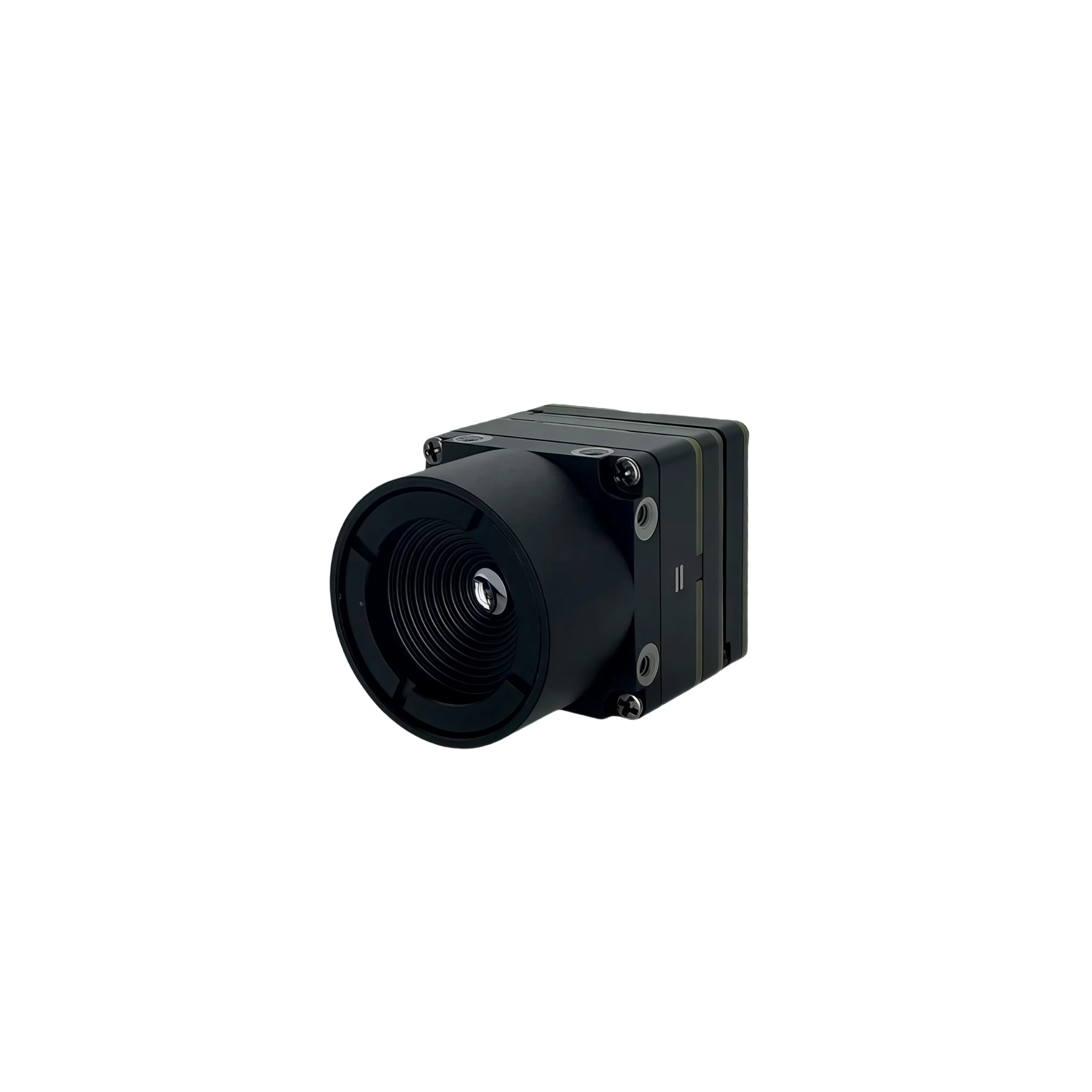
NTLTDC40A 40mJ Solid-State Non-Temperature Controlled Laser Target Designator
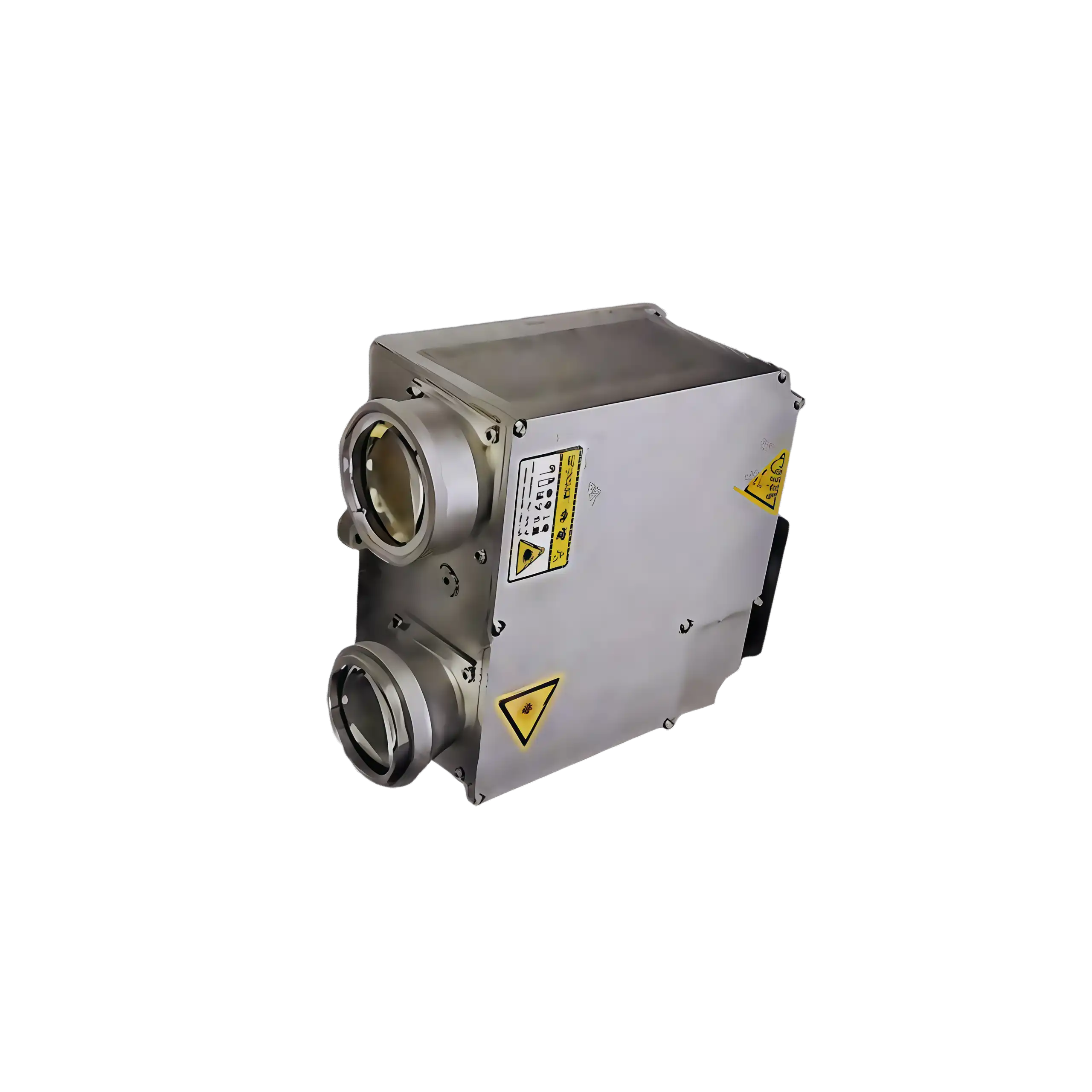
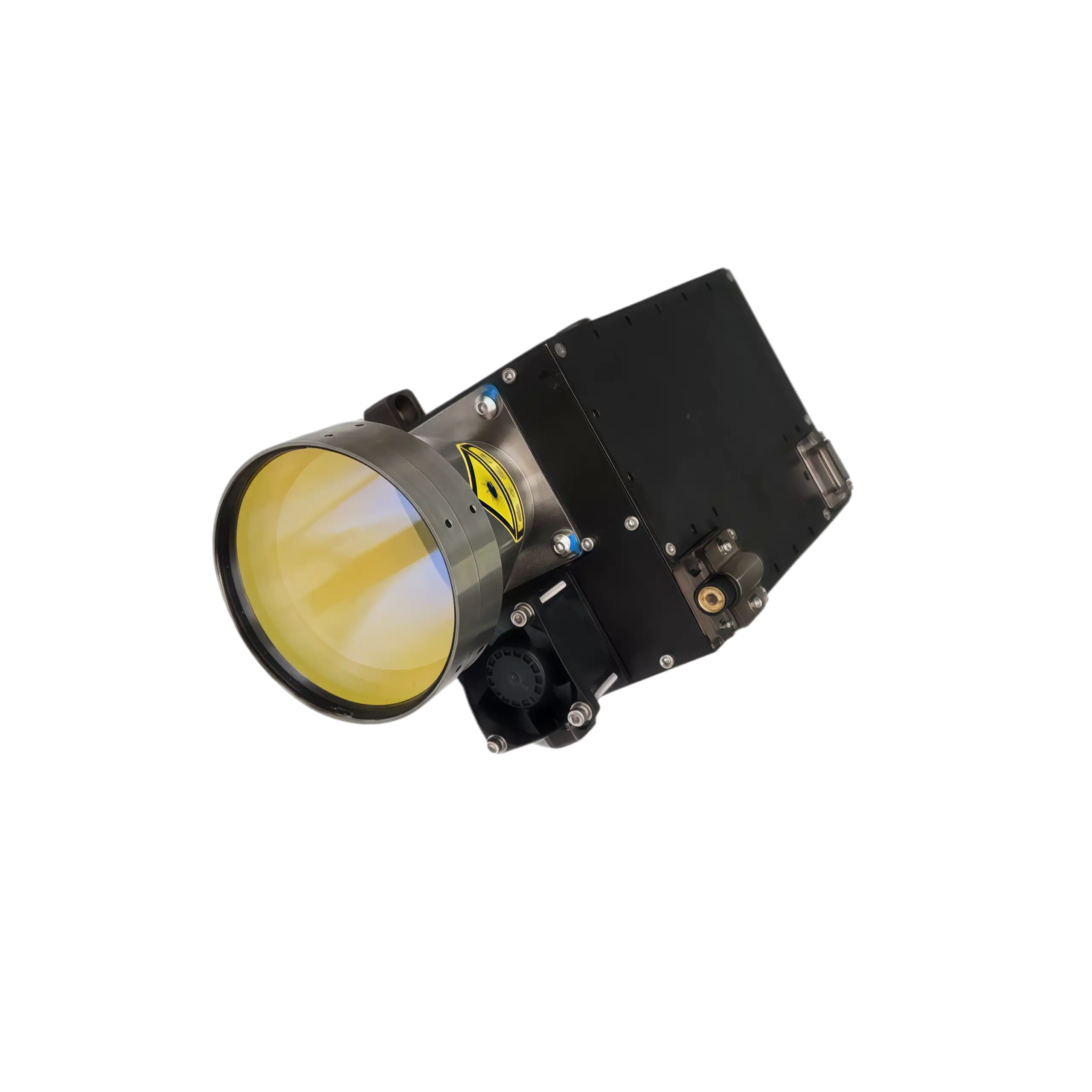
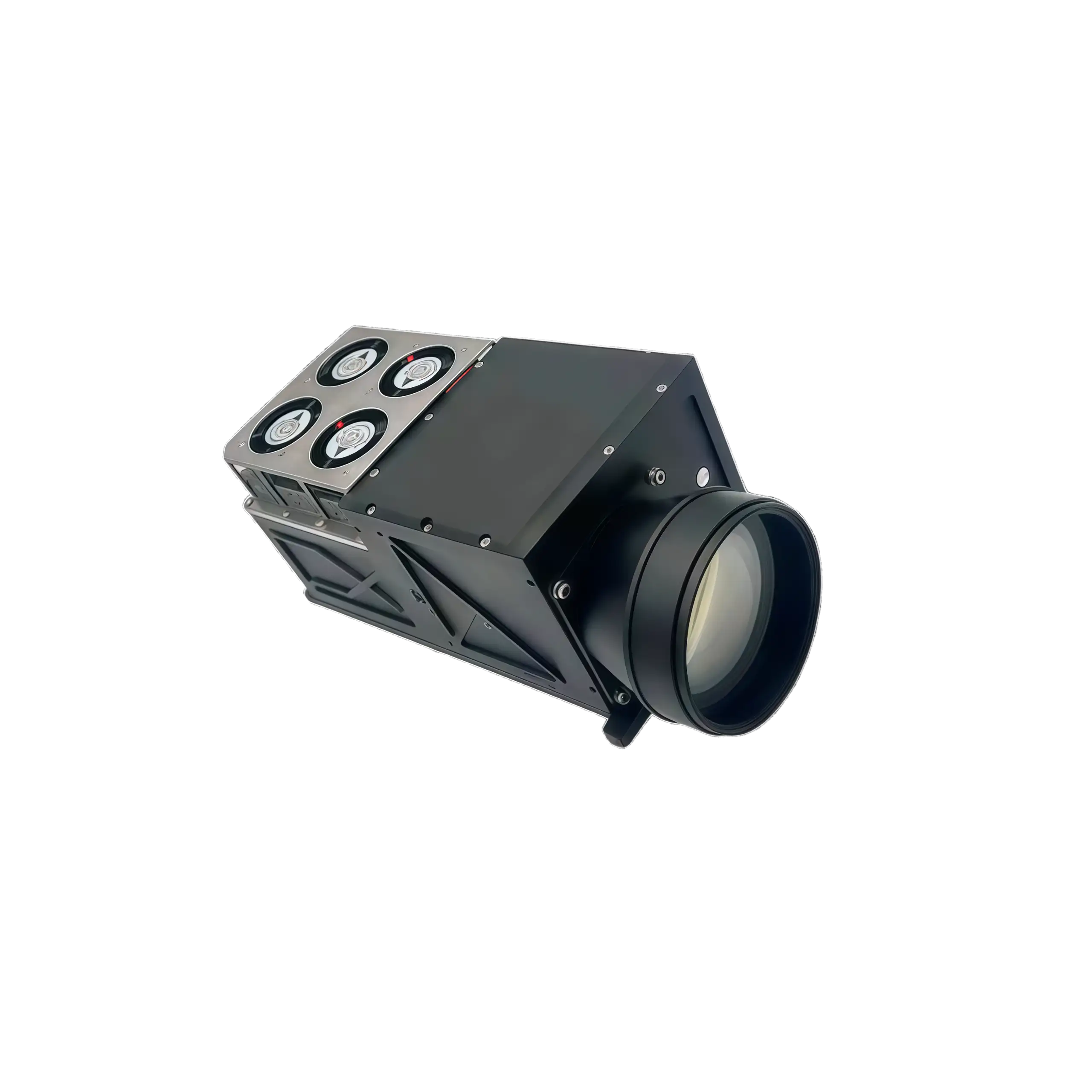
NTLTDC160A 160mJ High Energy Laser Target Designator System
The NTRON NTLTDC160A represents a highly specialized, non-thermally controlled solid-state solution delivering unmatched beam alignment and pulse output under severe optoelectronic platform constraints. Engineered for seamless system-level integration, this dual-function assembly consolidates long-range distance detection and programmable target illumination into a single compact housing.
- Sensing Capability: 50,000m Maximum Ranging with ≥98% Measurement Probability
- Structural Alignment: Extreme Axis Stability ≤0.03mrad under Heavy Flight Shocks
- Thermal Technology: NT-DPSSL Plug-and-Play Architecture with Instant Startup
- Operational Lifespan: Exceeding 2 Million Continuous Cycles with <10% Degradation
Developed by the NTRON engineering R&D division, the NTLTDC160A is a non-thermally controlled solid-state transmitter delivering consistent beam alignment and pulse output under severe platform constraints. Engineered for immediate system-level integration, this hardware assembly consolidates long-range distance detection and programmable target illumination into a standalone compact housing.
- Sensing Capability: 50,000m Maximum Ranging with ≥98% Measurement Probability
- Structural Alignment: Extreme Axis Stability ≤0.03mrad under Heavy Flight Shocks
- Thermal Technology: NT-DPSSL Plug-and-Play Architecture with Instant Startup
- Operational Lifespan: Exceeding 2 Million Continuous Cycles with <10% Degradation
I. NTLTDC160A Non-Thermally Controlled Solid-State Architecture
High-energy 1064nm optoelectronic sub-system for remote tracking platforms and advanced payload integration.
Deploying high-precision optoelectronic tracking loops within intense operational environments requires active transmitter hardware that bypasses heavy temperature regulation systems while maintaining strict optical alignment. The NTLTDC160A introduces an advanced Non-Thermally Controlled Diode-Pumped Solid-State Laser (NT-DPSSL) cavity arrangement, deploying a robust 160mj laser target designator sub-system capable of limiting energy fluctuation within a strict ±8% margin across full ambient shifts without utilizing cooling fluid loops. This optimized solid-state envelope allows this specific 160mj laser target designator assembly to emit highly synchronized, coded pulse intervals directly toward long-range vectors, maximizing the data refresh rate of downstream telemetry and remote sensor processing networks.
By integrating dual-function mechanics into a single rigid optomechanical block, the device operates as a high-integrity 160mj laser target designator architecture that achieves clean distance tracking across an operational envelope spanning 200m up to 50,000m, supported by a precise ±2m ranging accuracy. Internal system control runs on a standard RS422 differential communication bus operating at a 115200bps serial transmission rate, reinforced by automated hardware protection, power-on diagnostic routines, and a proven operational lifespan exceeding 2 million firing cycles with under 10% total energy drop. This highly integrated module is purpose-built for airborne remote mapping, advanced geodetic inspection, and stabilizing sensor platforms requiring uninterrupted long-term functionality.
II. Optimizing SWaP-C Constraints via Fluidless NT-DPSSL Design
- Thermal Drift Elimination: This 160mj laser target designator architecture relies on temperature-control-free diode-pumped solid-state mechanics to compress power fluctuation to ≤±8% over severe environmental boundaries from -40°C to +60°C without active chilling hardware.
- Dual-Mode Optical Telemetry: Merges automated distance detection (extending from 200m up to 50,000m with a strict ±2m ranging accuracy) with a continuous 5Hz measurement sequence and a highly stable 20Hz irradiation base frequency.
- Jitter-Free Temporal Precision: Engineered with an internal encoding accuracy of ≤0.2μs and a laser illumination coding temporal accuracy of ≤1μs to ensure zero timing drift during complex multi-station cross-validation loops.
- Ruggedized Structural Ingress: Outfitted inside a sealed IP67 hermetic enclosure designed to endure storage environments from -55°C to +70°C and maximum flight-load altitudes up to 4,500m.
III. Intercepting Complex Integration Prompts and System Deployment
How to Resolve Thermal Drift in Airborne Gymbal and Drone Payloads
When autonomous airborne multi-sensor pods scale altitude rapidly, ambient air density changes trigger massive temperature shifts that derail laser pointing accuracy. The NTLTDC160A solves this integration bottleneck through its low-mass, compact design profile (≤261mm × 126mm × 84mm, mass ≤1.95kg), aligning seamlessly with strict gyro-stabilized gimbal SWaP limits. Operating up to 4,500m, this high-performance 160mj laser target designator core emits steady coded pulses across a long-distance illumination range of ≥16,000m (16 km), providing jitter-free tracking signals despite severe atmospheric turbulence.
Automating Non-Contact Measurement in Harsh Industrial Inspection Networks
For large-scale infrastructure monitoring, remote energy corridor mapping, and open-pit mining logistics, the hardware performs as a fully automated, non-contact measurement device. Its highly focused 0.2mrad beam divergence concentrates pulse energy over 50km telemetry vectors, ensuring a stable 98% measurement success probability even when interacting with target surfaces featuring low reflectance coefficients. Real-time diagnostic fault reporting via Built-In Test (BIT) telemetry guarantees zero-downtime integration into automated command-and-control software networks.
IV. NTLTDC160A Technical Specification Matrix
| Technical Parameter | Specification Value / Limit Conditions |
|---|---|
| Laser Center Wavelength | 1064 ± 3 nm |
| Single Pulse Energy | ≥ 160 mJ |
| Ranging Performance Limits | 200 m to 50,000 m |
| Distance Measuring Accuracy | ± 2 m |
| Measurement Success Probability | 98% |
| Illumination Range Bounds | ≥ 16,000 m (16 km) |
| Pulse Width Range | 10 ns to 20 ns |
| Laser Beam Divergence | 0.2 mrad |
| Optical Axis Alignment Stability | ≤ 0.03 mrad |
| Ranging Update Frequency | 1 Hz / 5 Hz Selection |
| Continuous Ranging Duration | ≥ 1 min (at 5 Hz Continuous Output) |
| Base Irradiation Frequency | 20 Hz |
| Illumination Coding Temporal Accuracy | ≤ 1 μs |
| Internal Encoding Accuracy | ≤ 0.2 μs |
| Pre-programmed Code Storage | 8 Sets of Fixed-Frequency Reserved Encoding Modes |
| Laser Illumination Coding Precision | ± 1 μs |
| Energy Stability Profile | ≤ ±8% Energy Fluctuation (Full Temperature Range) |
| Total Mechanical Dimensions | ≤ 261 mm × 126 mm × 84 mm |
| Total Housing Mass | ≤ 1.95 kg |
| Integrated Optical Aperture | Common Aperture Co-axial Architecture |
| Mounting Parallelism Limit | ≤ 0.6 mrad (Normal to Datum Reference Surface) |
| Environmental IP Seal Class | IP67 Dust and Water Immersion Shielding |
| Operating Temperature Boundaries | -40°C to +60°C Extreme Environment Limit |
| Storage Temperature Limits | -55°C to +70°C |
| Maximum Operational Altitude | 4,500 m |
| Average Power Consumption | Avg ≤ 150 W (At Maximum Beam Divergence Profile) |
| Operating Voltage Supply | DC 28V (Operational Range: 22V to 32V) |
| Digital Communication Interface | RS422 Standard bus link |
| Serial Baud Rate Settings | 115,200 bps |
| External Sync Connection | RS-422 Differential Level Signal Input |
| Total Device Service Life | > 2 Million Cycles (With <10% Energy Degradation) |
| Built-In Test (BIT) Measures | Power-on, Startup, and Periodic Real-Time Diagnostic Fault Reporting |
| Irradiation Duration Mode A | Single cycle: ≥60s (interval: 60s, 2 cycles) |
| Irradiation Duration Mode B | Single cycle: ≥17s (interval: 10s, 8 cycles) |
| Cooling Interval Requirement | After 8 single cycles or 2 rapid cycles, the irradiation interval should be ≥30 minutes |
V. 1064nm Solid-State Core & Electrical Interface Details
The electrical sub-assembly relies on a standard DC 28V power rail capable of maintaining tight efficiency profiles under full average power load (Avg ≤150W). Emitter control sequences, telemetry status monitoring, and variable repetition frequency trigger commands are transmitted over a high-reliability differential level interface. This ensures complete immunity to electromagnetic interference (EMI) inside complex industrial systems.
- Power Supply Input: DC 28V nominal with wide-range tolerance from 22V up to 32V for vehicle or aircraft grid fluctuations.
- Command Communication protocol: RS422 duplex digital interface operating at a fixed 115200bps baud rate.
- Synchronization Logic: Dedicated RS-422 differential external sync input pins for zero-latency laser pulse timing alignment.
VI. Mechanical and Optical Interface Specifications for Laser Designator Systems
The mechanical framework utilizes an all-in-one opto-mechanical design to eliminate exposed electronics, securing strict axis parallelism of ≤0.6mrad. The housing dimensions are optimized within a 261mm × 126mm × 84mm spatial volume to allow rapid mounting onto high-precision gyro-stabilized gimbals or optical payloads.
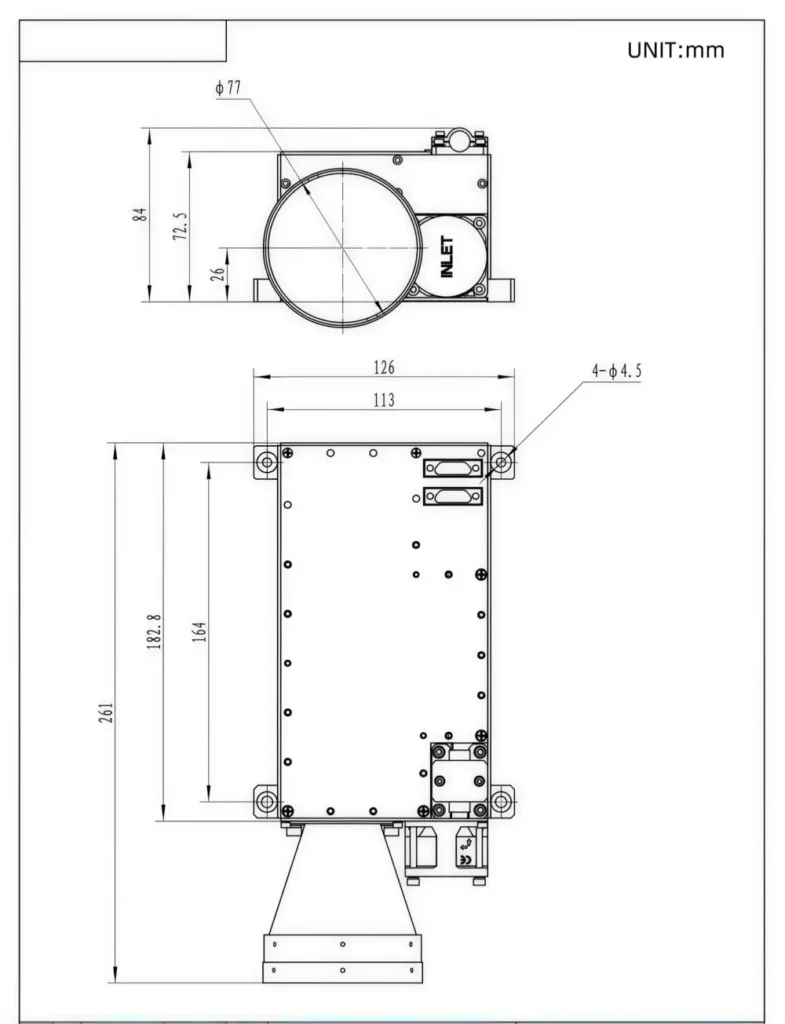
Effective Aperture: Common Aperture Optics Assembly | Mounting Configuration: 4 × φ4.5 precision screw bores along the stabilized datum mounting baseplate.
- Optical Window Architecture: Features a high-transmittance, multi-layer coated common aperture window that handles the high-energy 160mJ peak pulse exit while protecting the high-gain internal receiver path.
- Structural Alignment Datum: Machined base references guarantee an optical axis stability of ≤0.03mrad, maintaining alignment over extensive thermal cycles and heavy shocks.
- Integrated Cooling Management: Incorporates localized forced-air fan cooling channels balanced against maximum power dissipation profiles, ensuring zero cavity deformation.
Radiation Eye Safety Warning (Class 4): The NTLTDC160A emits dangerous, invisible 1064nm laser radiation capable of causing severe retinal burns or permanent vision damage. Personnel must use OD6+ deep red-tinted or gold-coated protective eyewear. Engineering lockouts and certified optical safety training are mandatory during installation.
VII. NTLTDC160A Universal Adaptability and System-Level Integration
The engineering design of the NTLTDC160A completely extends beyond the single application scenarios defined above. It functions as a highly standardized, universally adaptable 1064nm laser source engineered for zero-configuration replacement across a wide variety of hosting architectures. Whether your system requires a static installation, a mobile field survey core, or a high-vibration airborne payload, the hardware adapts without requiring customized internal optic restructuring.
If your integration platform faces extreme spatial bottlenecks and strict mass limits, exploring a sub-tier layout is highly recommended. Learn more about our NTLTDC40A Ultra-Compact 40mJ Laser Target Designator Module, which packs a 25km ranging core into a palm-sized, sub-0.535kg chassis for agile edge embedding.
The core structural components feature standardized baseplate datum parameters paired with a universally compatible RS422 communication interface. This guarantees that developers can integrate this 160mj laser target designator module into generic multi-sensor EO/IR pods, third-party stabilised gimbals, marine exploration enclosures, and vehicle-mounted remote control tracking platforms without hardware layout modifications. With its rugged IP67 hermetic shell and non-thermally controlled instant startup, it serves as a flexible, dependable laser transmitter core capable of driving systemic tracking logic anywhere inside your macro-sensing networks.