0
NTDFM Dual-Frequency GNSS Intelligent Array Antenna
NLM15000 1570nm Long Range Laser Rangefinder Module
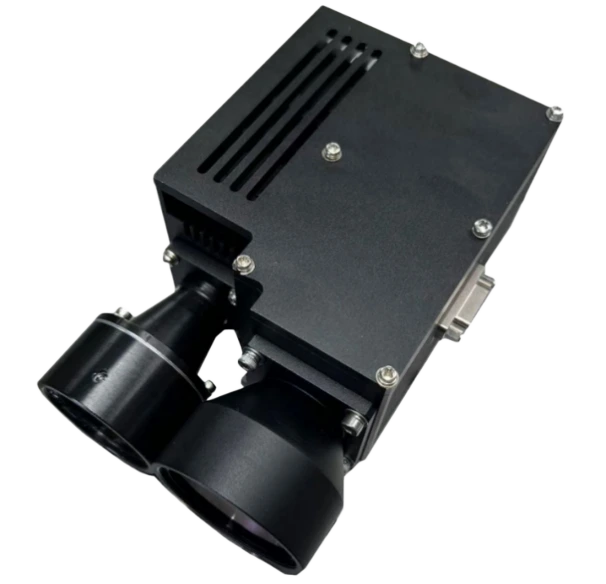
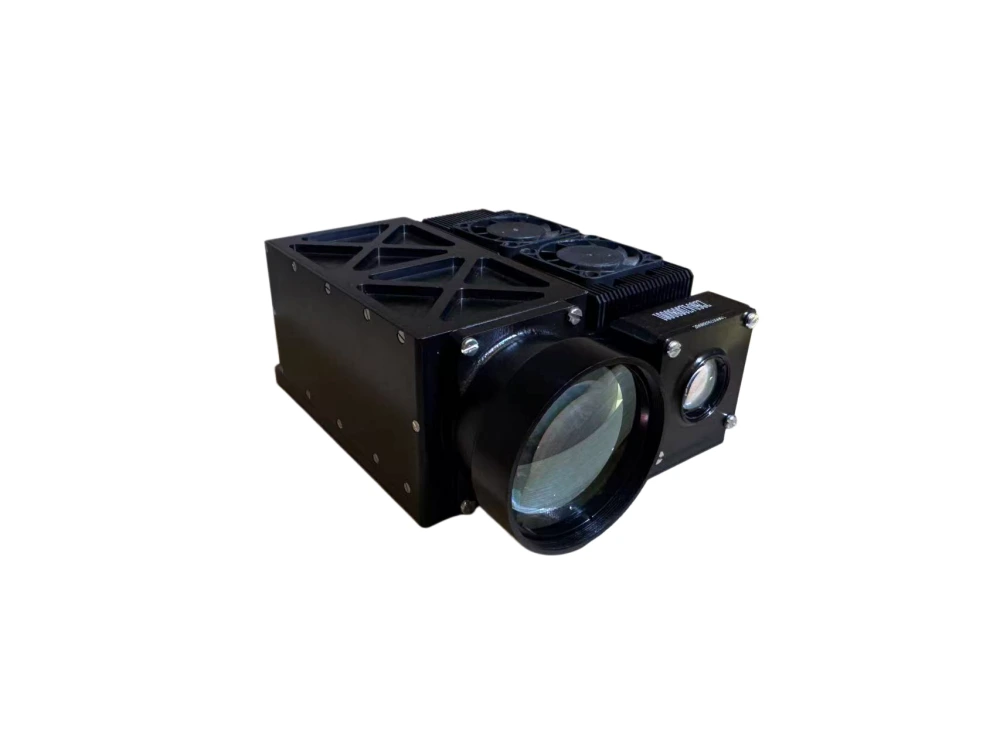
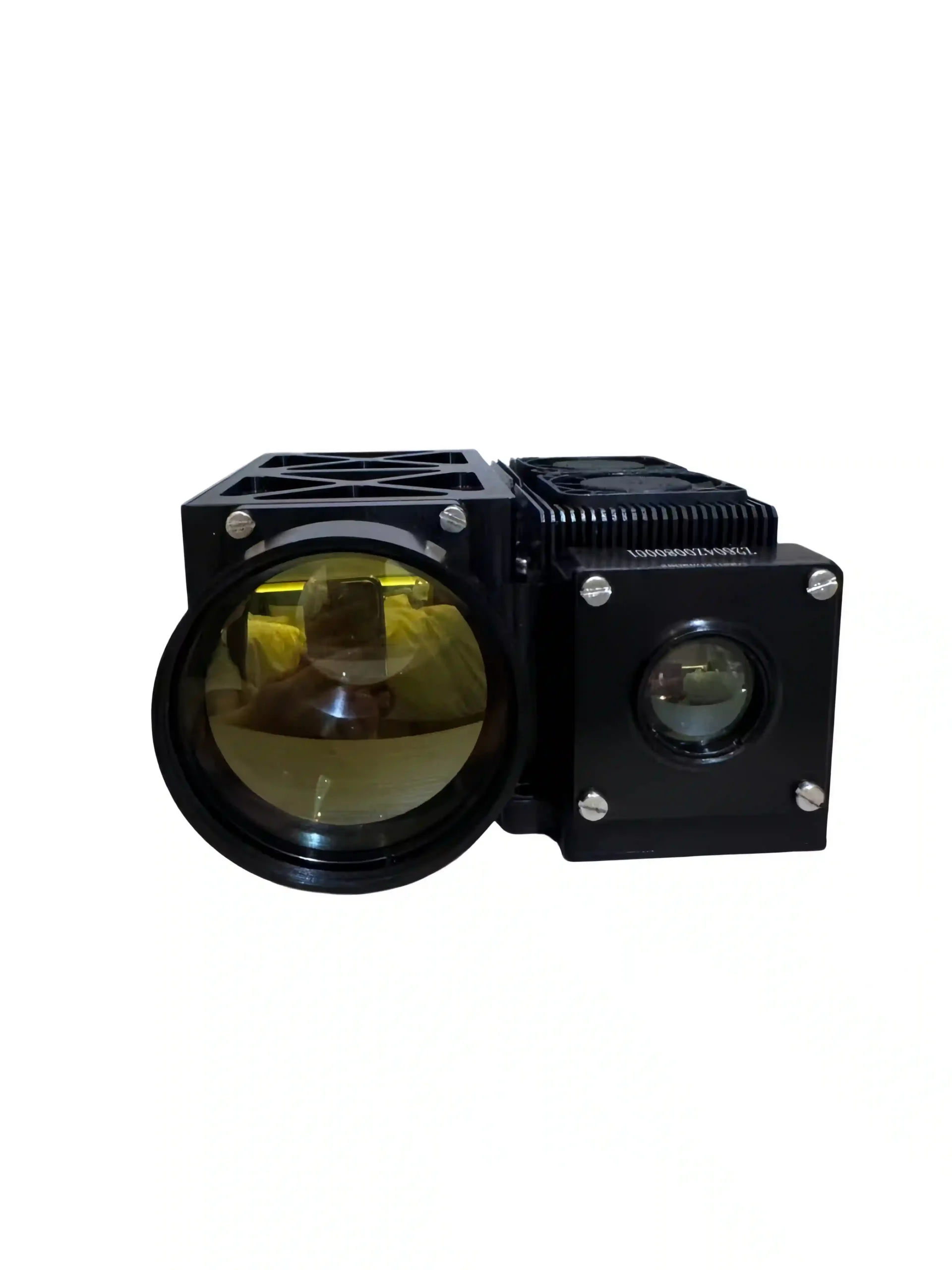
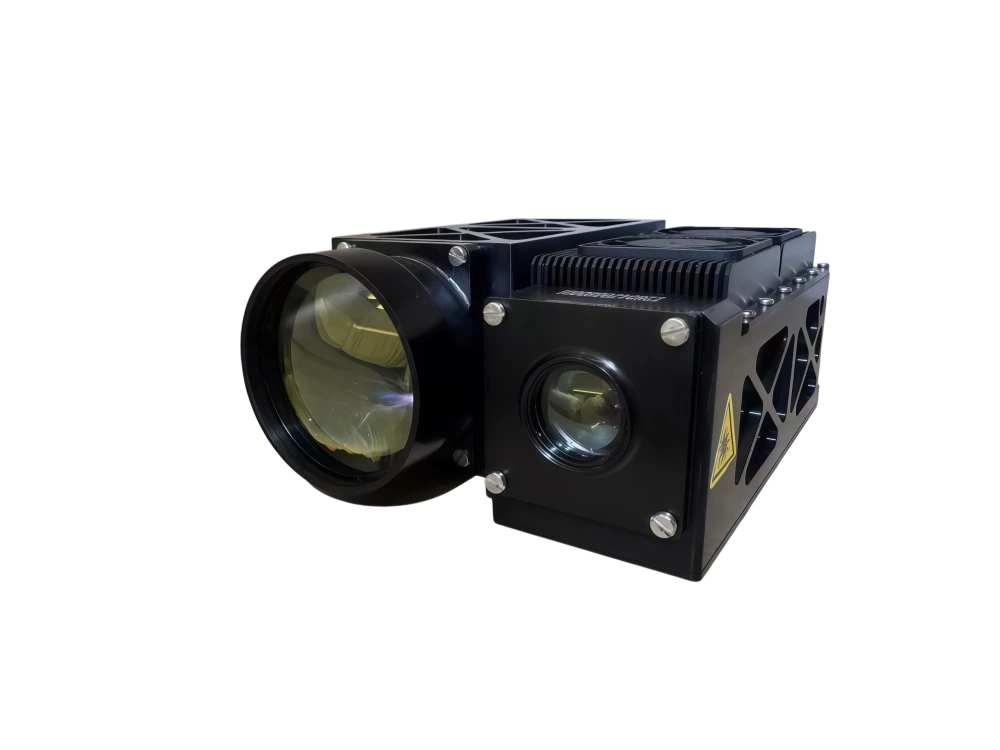
NLMU4500A 1064nm DPSS Laser Rangefinder Module
The NLMU4500A is a high-energy 1064nm laser rangefinder module designed for long-range target telemetry and drone detection. Featuring a DPSS laser engine, co-optical aperture geometry, and passive thermal design, it delivers high-precision ranging up to 4.5km for electro-optical surveillance pods and vehicle-mounted systems.
- Pulse Energy: ≥40mJ @ 1064nm with ≤10% pulse fluctuation.
- UAV Detection: ≥3.5km (0.1×0.2m target) / ≥4.5km (0.2×0.3m target).
- SWaP Profile: Compact ≤860g envelope (150×102×55mm).
- Thermal Architecture: Passive design operating from -40°C to +60°C.
NLMU4500A 1064nm Laser Rangefinder Module Overview
The NLMU4500A is a specialized solid-state 1064nm laser rangefinder module designed for long-distance perimeter defense, low-altitude airspace management, and electro-optical platform integration. As an advanced DPSS laser ranging module delivering high single-pulse energy (≥40mJ) and a calibrated beam divergence (≥1mrad), this NLMU4500A laser module provides high return echo discrimination against small consumer and industrial drones. Its co-optical aperture rangefinder architecture combines optical transmission and reception along a single shared optical path, reducing envelope dimensions while maintaining high boresight stability under operational vibration. Engineered as a thermal-management-free UAV detection laser sensor with integrated power protection circuitry, the module eliminates active heating and cooling mechanisms, significantly lowering payload weight and electrical complexity for multi-sensor pods and vehicle-mounted surveillance systems.
NLMU4500A 1064nm Laser Rangefinder Module Primary Capabilities
- High-Energy DPSS Laser Ranging Module Emitter: Delivers single-pulse output ≥40mJ at 1.064μm ± 0.003μm with energy fluctuation ≤10% within a single operational cycle.
- Precision UAV Detection Laser Sensor Range: Detects 0.1m×0.2m mini drones at ≥3.5km and 0.2m×0.3m multi-rotors at ≥4.5km under standard visibility (≥10km, RH ≤60%, 30% target reflectivity).
- Thermal-Management-Free 1064nm Laser Rangefinder Module Architecture: Operates efficiently across -40°C to +60°C ambient temperatures without active thermoelectric coolers (TEC) or liquid chilling systems.
- Rigid Co-Optical Aperture Rangefinder Boresight Stability: Delivers spatial boresight instability ≤0.1mrad and optical-to-mechanical axis alignment deviation ≤0.6mrad.
- Integrated Hardware Protection: Built-in power supply protection circuitry isolates voltage fluctuations within the 22VDC to 32VDC input window.
- External Hardware Time Synchronization: Provides dedicated RS422 differential time synchronization inputs for precise multi-sensor pod coordinate timestamping.
- Built-In Test (BIT) Self-Diagnostics: Integrated telemetry circuitry in the NLMU4500A laser module automatically monitors and reports operating voltage, laser status, and functional self-check feedback.
NLMU4500A 1064nm Laser Rangefinder Module Technical Data Matrix
| Engineering Parameter | Technical Specification Baseline |
|---|---|
| Product Category | NLMU4500A 1064nm Laser Rangefinder Module (DPSS Laser Ranging Module) |
| Optical Architecture | Co-Optical Aperture Rangefinder (No active temperature control required) |
| Operating Laser Wavelength | 1.064 μm ± 0.003 μm (1064 nm) |
| Laser Pulse Energy Output | ≥ 40 mJ |
| Single-Pulse Energy Fluctuation | ≤ 10% within a single operational cycle |
| Beam Divergence Angle | ≥ 1.0 mrad |
| Spatial Boresight Instability | ≤ 0.1 mrad |
| Optical Axis Alignment Deviation | Parallelism deviation to mechanical installation datum plane ≤ 0.6 mrad |
| UAV Detection Laser Sensor Range (0.1m×0.2m) | ≥ 3.5 km (Visibility ≥10km, Relative Humidity ≤60%, Target Reflectivity 30%) |
| UAV Detection Laser Sensor Range (0.2m×0.3m) | ≥ 4.5 km (Visibility ≥10km, Relative Humidity ≤60%, Target Reflectivity 30%) |
| Distance Measurement Accuracy | ± 1 m |
| Distance Resolution | ≤ 38 m |
| Minimum Blind Zone Boundary | ≤ 200 m |
| Measurement Repetition Frequency (PRF) | 1 Hz to 10 Hz adjustable |
| Continuous Radiation Duty Cycle | 1 minute continuous radiation followed by 3 minutes resting cycle |
| Serial Data Bus Interface | 1-Channel Asynchronous RS422 @ 115,200 bps |
| External Synchronization Signal | RS422 differential voltage levels (Sync+ / Sync-) |
| Power Supply Input Window | 28 VDC nominal (Stable operating tolerance window: 22 VDC to 32 VDC) |
| Circuit Protection | Integrated power supply protection circuitry |
| Peak Power Consumption | ≤ 120 W |
| Total Hardware Mass | ≤ 860 g |
| Physical Envelope Dimensions | ≤ 150 mm × 102 mm × 55 mm |
| Electrical Connector Models | Chassis: J30JZLN15ZKWA000 | Mating Cable: J30JZ/XN15TJCAL01 (L=300mm) |
| Operating Ambient Temperature | -40°C to +60°C |
| Storage Thermal Range | -55°C to +70°C |
| Maximum Operational Altitude | 4,500 m above sea level |
| Reliability & Maintainability | MTBF ≥ 1,800 hours; MTTR < 30 minutes (Line-Replaceable Unit architecture) |
NLMU4500A Structural Dimensions & Mechanical Layout
The NLMU4500A laser module features a compact structural envelope measuring 150mm × 102mm × 55mm with a total net weight of ≤860g. As a high-density 1064nm laser rangefinder module, the optical assembly employs a shared co-optical aperture with an effective clear aperture of Ø50mm, ensuring maximum optical transmission while maintaining a low-profile footprint. Four Ø4.50mm through-mounting holes distributed across the chassis provide rigid fastening to stabilized pan-tilt gimbals and vehicle-mounted brackets.
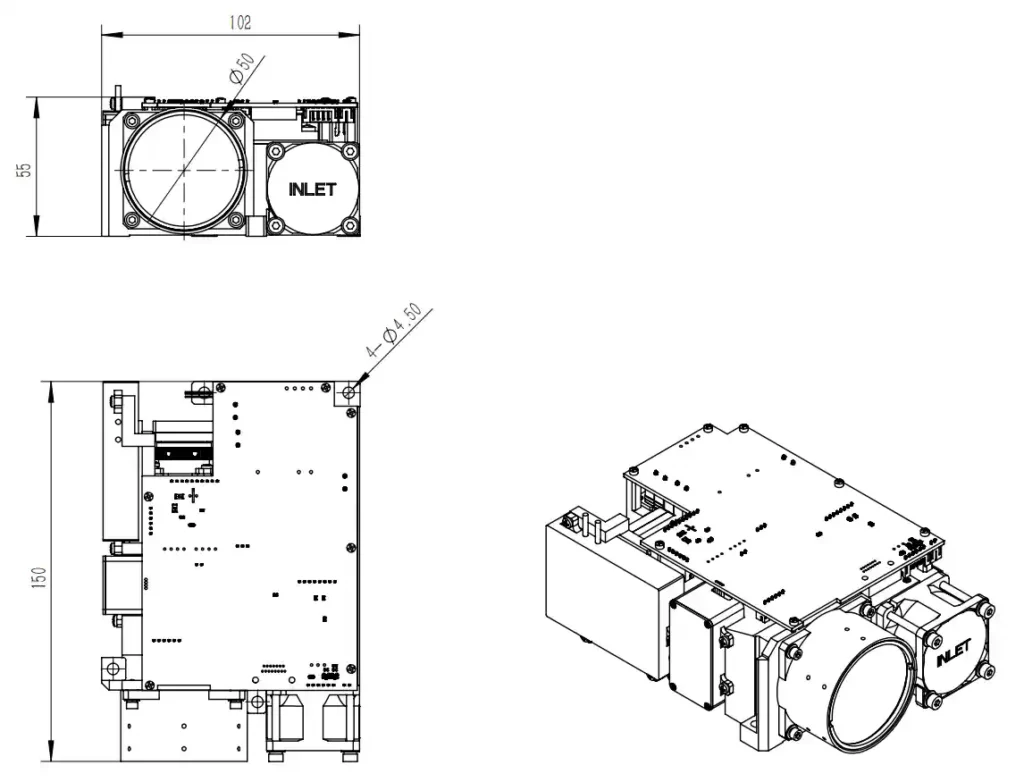
Figure 1: Mechanical dimensions of the NLMU4500A 1064nm laser rangefinder module, highlighting the 150mm × 102mm × 55mm envelope, Ø50mm clear aperture, and 4× Ø4.50mm mounting hole positions.
NLMU4500A Electrical Interface Blueprint & Pinout Assignments
Electrical interfacing for the NLMU4500A 1064nm laser rangefinder module is provided by an internal J30JZLN15ZKWA000 chassis connector (system side) mating with an external J30JZ/XN15TJCAL01 cable assembly (length L=300mm). Multi-pin power distribution and RS422 differential signal paths ensure signal integrity and electromagnetic compatibility (EMC).
| Pin Number | Signal Designation | Input / Output Type | Functional Description |
|---|---|---|---|
| P-1 to P-4 | 24V+ Line Input | Power Input | Main Power Line Positive (22VDC to 32VDC Operating Window, 28VDC Nominal) |
| P-5 to P-8 | 24V GND | Power Ground | Main DC Power Supply Return Ground Path |
| P-9 | RS422_RX+ | Signal Input | Laser Rangefinder Serial Data Receive Positive (Rx+) |
| P-10 | RS422_RX- | Signal Input | Laser Rangefinder Serial Data Receive Negative (Rx-) |
| P-11 | RS422_TX- | Signal Output | Laser Rangefinder Serial Data Transmit Negative (Tx-) |
| P-12 | RS422_TX+ | Signal Output | Laser Rangefinder Serial Data Transmit Positive (Tx+) |
| P-13 | NC | — | Reserved / Internal Test (Do Not Connect) |
| P-14 | External Time Sync+ | Signal Input | External Time Synchronization Differential Input Positive (RS422+) |
| P-15 | External Time Sync- | Signal Input | External Time Synchronization Differential Input Negative (RS422-) |
NLMU4500A 1064nm Laser Rangefinder Module Industrial Applications
- Low-Altitude Airspace Management & Anti-UAV Defense: Acts as a high-precision UAV detection laser sensor to deliver long-distance target telemetry and continuous tracking for drone defense platforms.
- Perimeter Defense & Critical Infrastructure Protection: Utilizes the high pulse energy of the 1064nm laser rangefinder module to provide early-warning ranging for substations, energy storage hubs, and airports.
- Border & Coastal Observation Stations: Deploys this DPSS laser ranging module to compensate for sparse sensor infrastructure across vast plains and coastal shorelines.
- Vehicle-Mounted Mobile Patrols: Ruggedized Line-Replaceable Unit (LRU) construction enables the NLMU4500A laser module to maintain stable ranging under severe vehicle vibration and temperature fluctuations.
- Stabilized Multi-Sensor EO/IR Observation Pods: Standardized electrical and mechanical interfaces support plug-and-play integration of the co-optical aperture rangefinder alongside thermal imagers and daylight cameras.
Engineering Integration Guidance Note: Explore our comprehensive Laser Rangefinder Modules portfolio to cross-reference 1064nm and 1535nm models, evaluate beam divergence specifications, or contact our engineering specialists directly to request full technical datasheets and 3D CAD files for the NLMU4500A laser module.