0
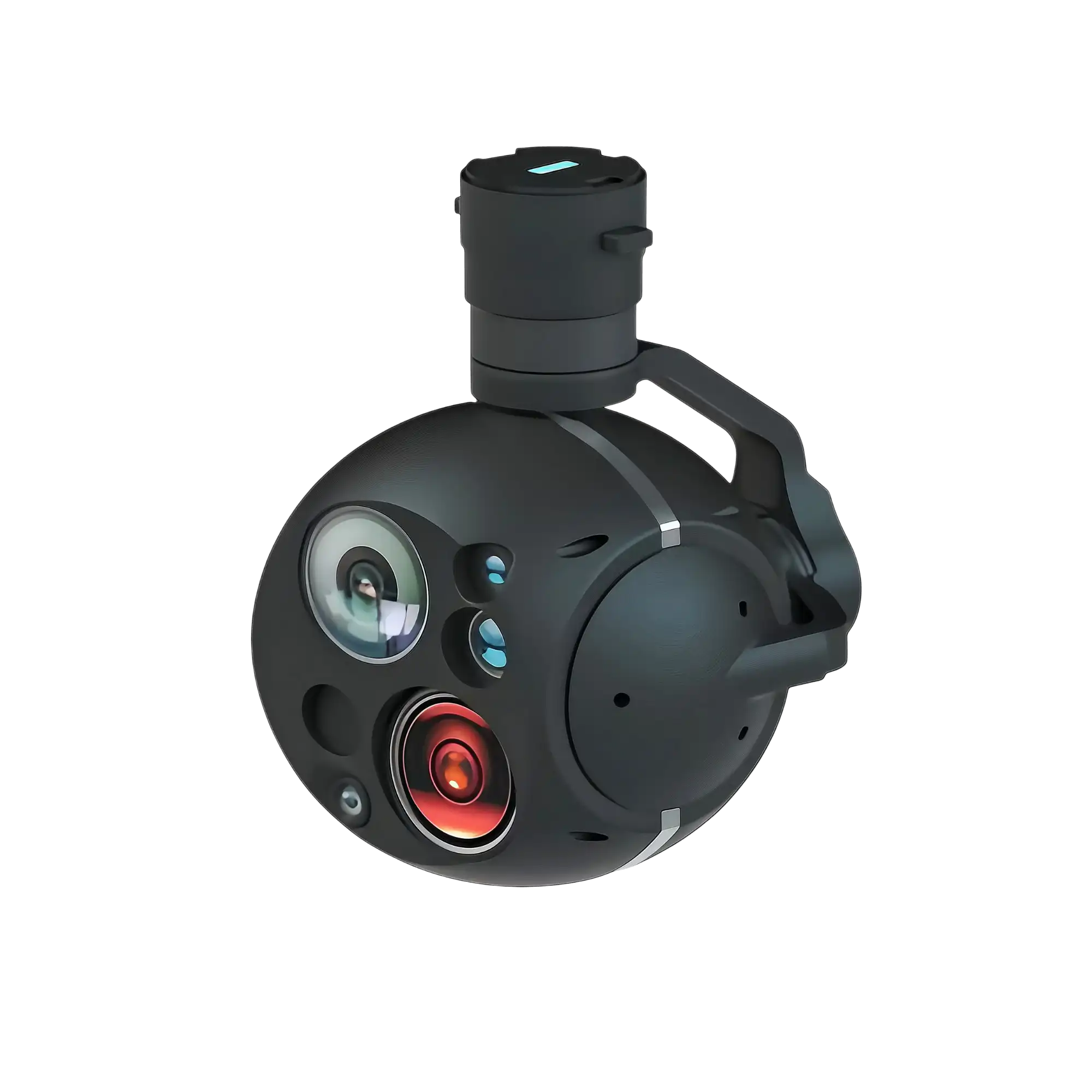
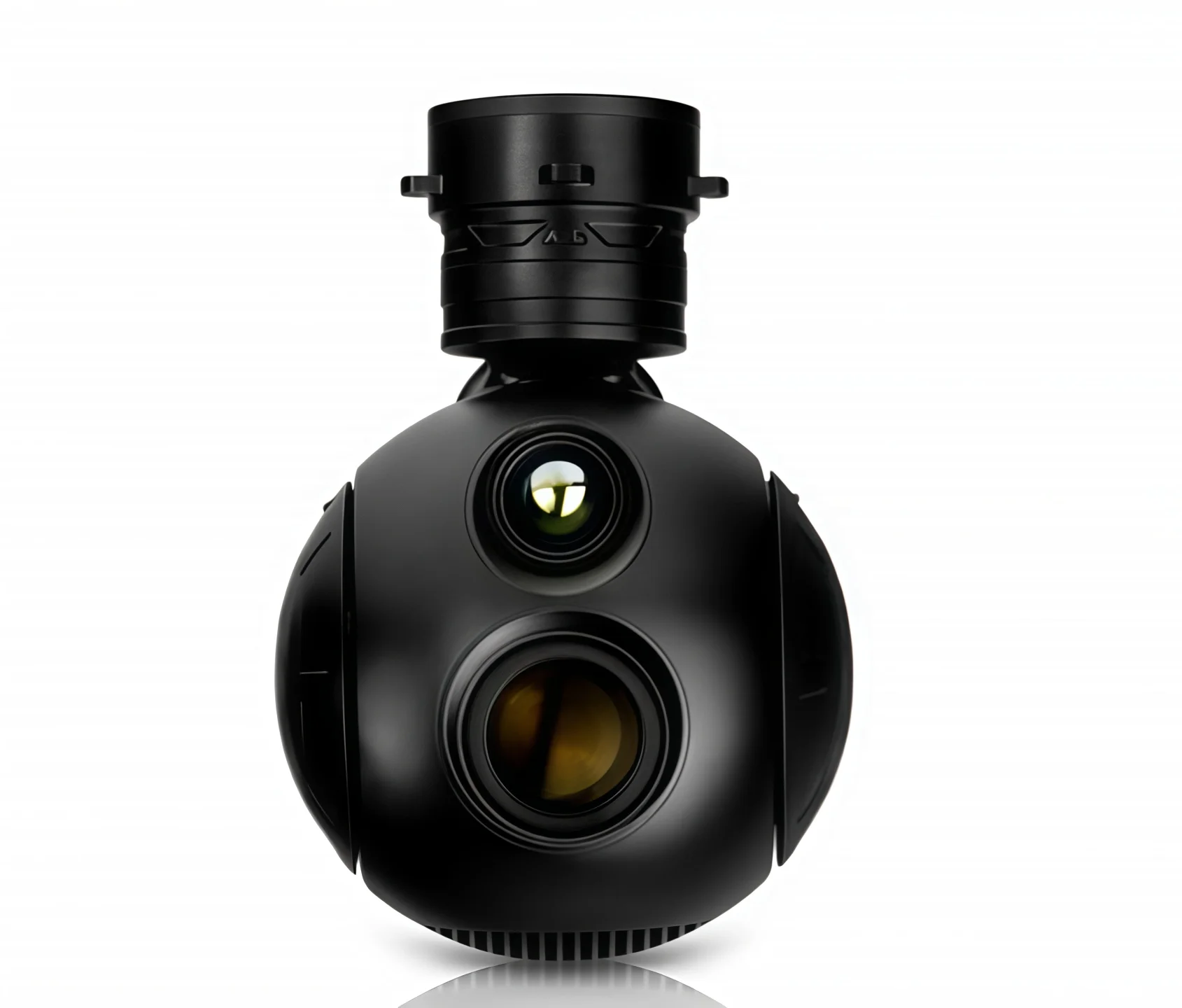
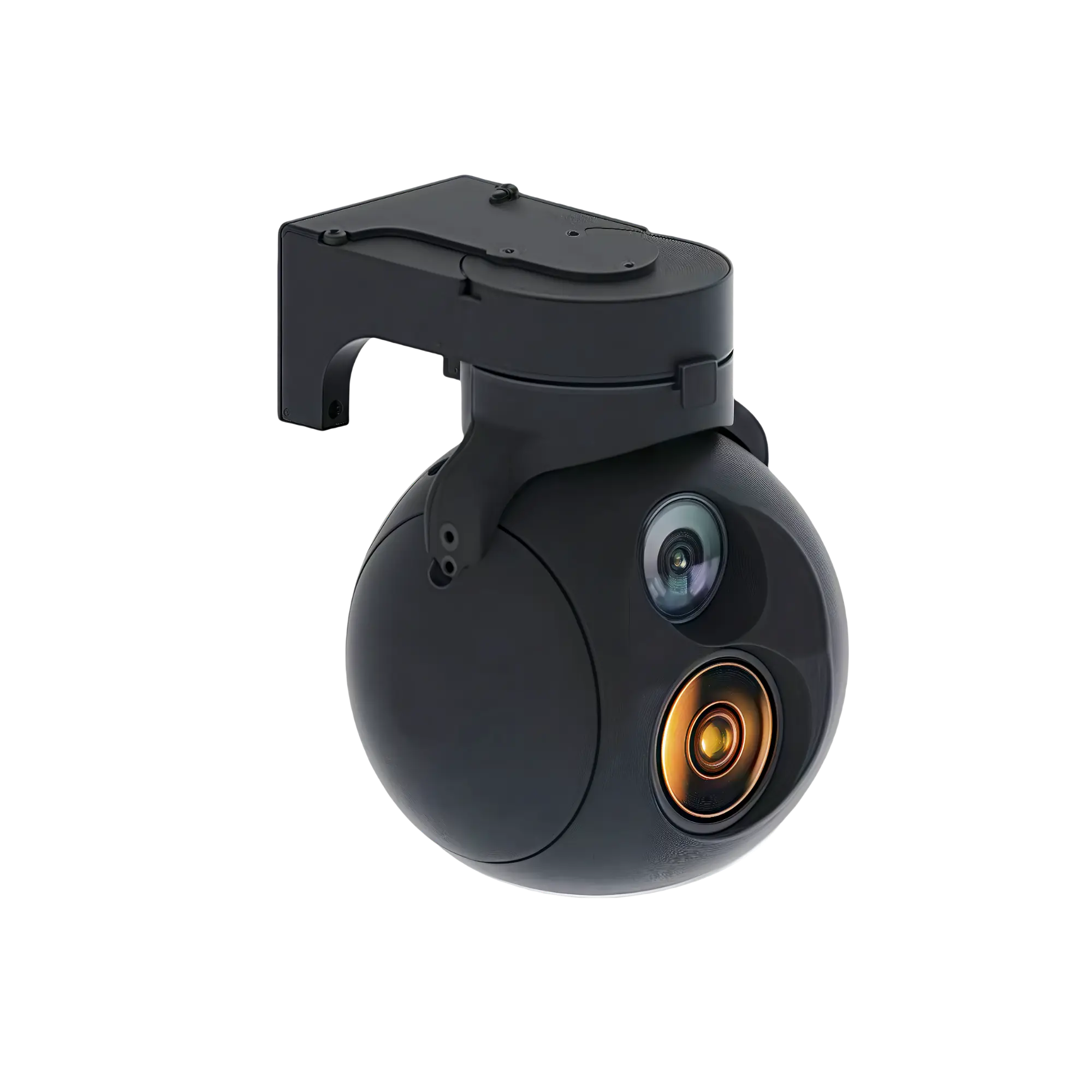
NTPOD80 Miniature Electro-Optical Sensor Pod
The NTPOD80 implements precision optical-mechanical-electrical integration inside an ultra-lightweight, high-resilience payload shell tailored for unmanned platforms. Engineered to maximize SWaP-C optimization parameters, this dual-sensor framework guarantees reliable dynamic stabilization and target tracking performance across demanding environments.
- Dual-Sensor Core: Formulated with a fixed-focus 8mm visible sensor and an uncooled 18mm LWIR thermal microbolometer array.
- Structural Footprint: Ultra-compact geometry scaling 63mm x 76mm x 83mm with an installation weight under 280g.
- Dynamic Stabilization: Embedded dual-axis servo gimbal paired with deep electronic image stabilization algorithms.
- Electrical Tolerance: Broad 12V to 28V operational voltage input with high-G catapult launch shock verification.
NTPOD80 Miniature Electro-Optical Sensor Integration Profile
To meet the stringent space, weight, and power limits encountered during commercial flight deployment, the NTPOD80 Miniature Electro-Optical Sensor brings dual-channel multi-spectral imaging to small scale aerial systems. By housing a 1920×1080 HD visible light assembly and an uncooled infrared thermal sensor matrix within a unified gyro-stabilized enclosure, this hardware platform circumvents data collection degradation typically induced by platform vibration. Commercial drone system developers gain deep deployment flexibility via a fully shielded metal chassis built to achieve high EMC standards and layout protection. This adaptive Miniature Electro-Optical Sensor subsystem relies on integrated automated analytics to bypass traditional operator fatigue during extended multi-spectral observations by running real-time tracking software directly on the edge processor.
NTPOD80 Miniature Electro-Optical Sensor Primary Functions
- Multi-Spectral Thermal Framework: This high-resilience Miniature Electro-Optical Sensor couples a high-resolution visible-light camera core with an uncooled infrared thermal microbolometer for synchronized day-night observation capabilities over industrial pipelines.
- High-Acceleration Mechanical Resistance: Structural chassis withstands structural shock loads up to 400g, optimized specifically to protect the internal optics of this Miniature Electro-Optical Sensor during high-velocity commercial aircraft deployment.
- Dual-Axis Servo Stabilization: Employs physical dual-axis dual-frame mechanical stabilization integrated with complementary electronic image stabilization to ensure smooth frame-by-frame clarity.
- Dynamic Asset Target Tracking: Onboard algorithmic tracker drives the Miniature Electro-Optical Sensor to calculate dynamic positional vectors for automated target tracking of vehicles and human subjects.
- Advanced Power Management: Accepts wide operational voltage inputs alongside dynamic power consumption management to protect core avionics and extend vehicle battery lifespans.
NTPOD80 Miniature Electro-Optical Sensor Technical Data Matrix
| Kinematic Stabilization Performance | |
| Primary Instrumentation Class | Dual-Channel Miniature Electro-Optical Sensor |
| Mechanical Pitch Angular Limits | -100° to +40° Range |
| Mechanical Yaw Angular Limits | -110° to +110° Range |
| Line-of-Sight Stable Accuracy | 0.1mrad (1°/2Hz) (1σ) |
| Maximum Dynamic Angular Acceleration | ≥100°/s |
| Absolute Angular Position Accuracy | ≤0.3° |
| Automated Video Tracking Velocity | ≥40°/s |
| Visible Light Sensor Engineering Parameters | |
| Native Pixel Resolution / Frame Rate | 1920 × 1080 Pixels @ 60fps |
| Fixed Optical Focal Length | 8mm Core |
| Optical Angular Field of View (FOV) | 38.3° Horizontal × 22.1° Vertical |
| Infrared Thermal Sensor Engineering Parameters | |
| Thermal Matrix Resolution / Frame Rate | 640 × 512 Pixels @ 60fps |
| Core Configuration Class | Uncooled Infrared Microbolometer Assembly |
| Thermal Focal Length / Field Angle | 18mm Core, FOV: 24° × 18.1° |
| System Electrical & Environmental Tolerances | |
| Operational Voltage Input | DC 12V – 28V Range |
| Power Consumption Footprint | Average: ≤10W / Peak Load Draw: ≤20W |
| Primary Command Protocol | RS232 Serial Data Bus |
| Digital Video Telemetry Link | IP Network Interface |
| Operational Ambient Thermal Limits | -40°C to +60°C Extreme Range |
| Non-Operational Storage Thermal Limits | -50°C to +70°C Safe Buffer |
NTPOD80 Miniature Electro-Optical Sensor Mechanical Dimensions
| Mechanical & Structural Parameters | |
| Physical Envelope Dimensions | 63mm × 76mm × 83mm |
| Total Assembly Weight | ≤280g |
| Mechanical Acceleration Load Shock | ≥400g Operational Verification |
| Structural Mounting Interface | 4 × M3 – 6H Threaded Layout |
| Mounting Footprint Grid | 30mm × 13.46mm Position Pattern |
| Enclosure Shielding Matrix | Fully Shielded Metal Housing |
NTPOD80 Enclosure Engineering Layout
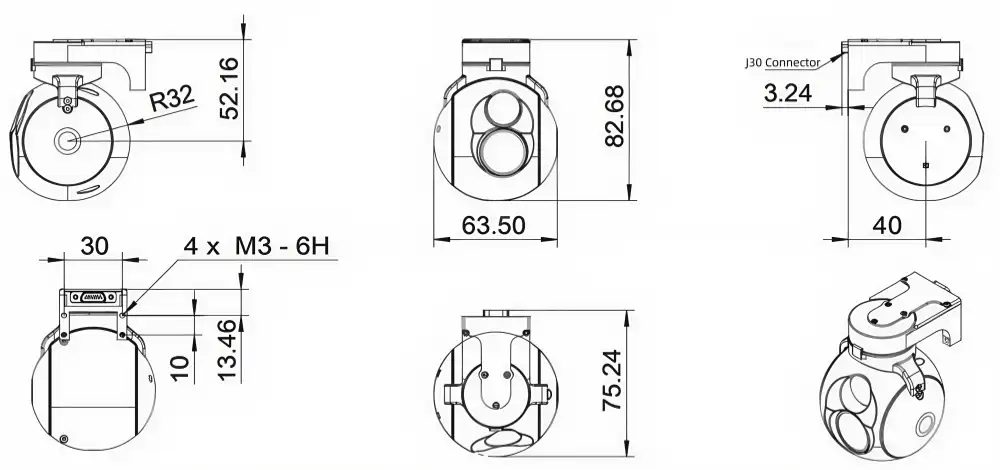
Figure 1: Outline drawings defining structural clearance markers, 63.50mm width, 82.68mm overall height profile, 4 x M3-6H configuration points, and standardized micro-connector interface location.
NTPOD80 Miniature Electro-Optical Sensor Patrol Application Scenarios
The light physical envelope and heavy-duty structural chassis render this integrated Miniature Electro-Optical Sensor an effective choice for a wide variety of civil aerial applications. Integrated into industrial multi-rotor platforms, it conducts autonomous powerline patrols and long-distance pipeline inspections without causing payload balance complications. During emergency corridor mapping and disaster management initiatives, the uncooled long-wave infrared tracking system cuts through atmospheric obscurants to accelerate critical infrastructure inspection. Additionally, its specialized high-acceleration mechanical verification ensures high stability during automated corridor scanning when the Miniature Electro-Optical Sensor payload is deployed on heavy-duty commercial fixed-wing drone fleets.
Dual-Channel Visible Sensor Alternatives: This miniature micro-connector-driven payload counteracts strict physical volume constraints on lightweight commercial flight platforms. If your engineering profile demands aggressive weight reduction down to 240g or alternative WFOV/NFOV optical matrix configurations, analyze the technical assets of our NTPOD80A Commercial-Grade Micro Pod to optimize system deployment efficiency.
SWaP-C Three-Axis Stabilization Upgrades: For automated observation networks requiring active 3-axis gyro-stabilization matched with full continuous network video streaming under tight mass containment limits, cross-reference the sensor matrices of our ultra-light NTPOD64 Three-Axis Gyro-Stabilized Micro Pod to receive comprehensive hardware schemas.