0
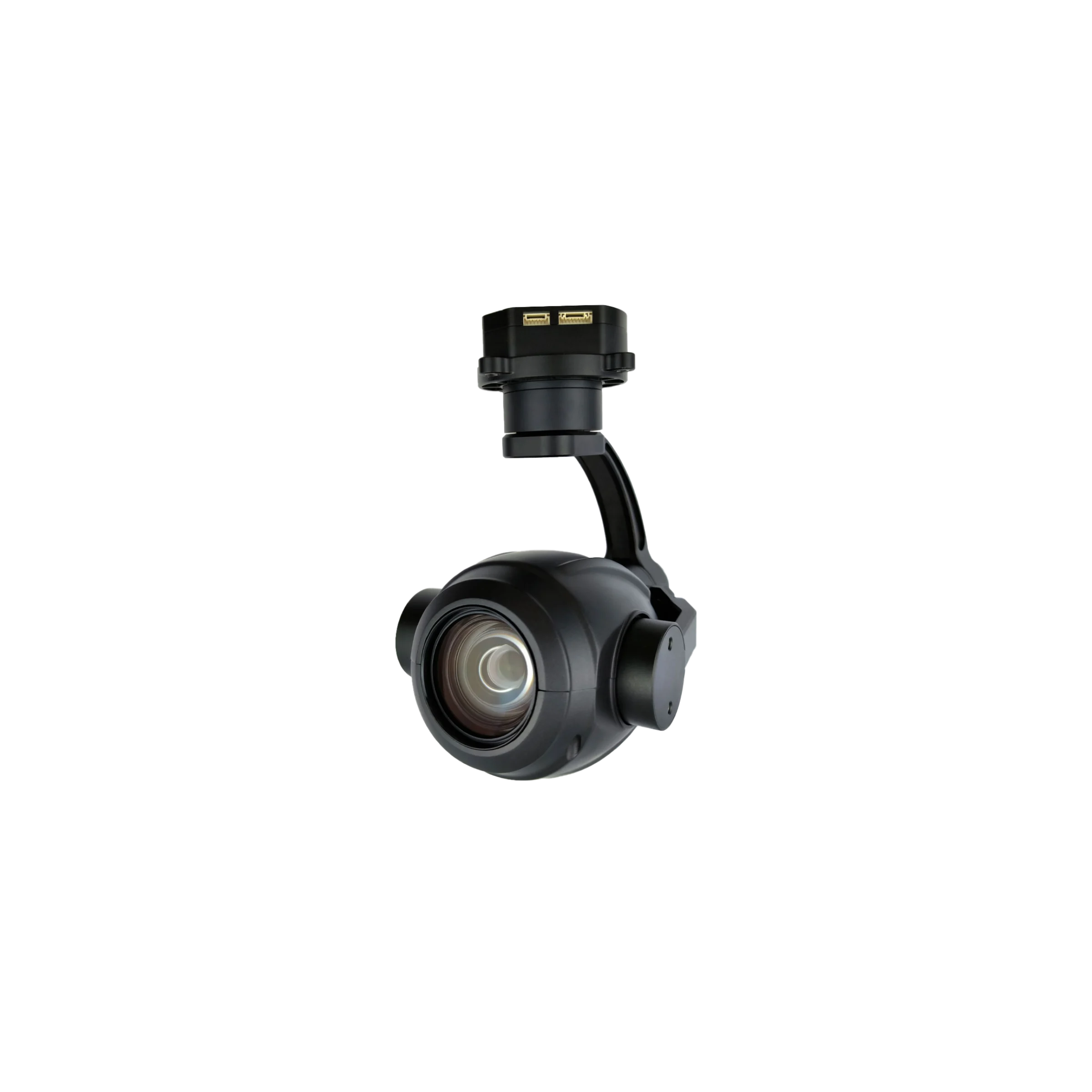
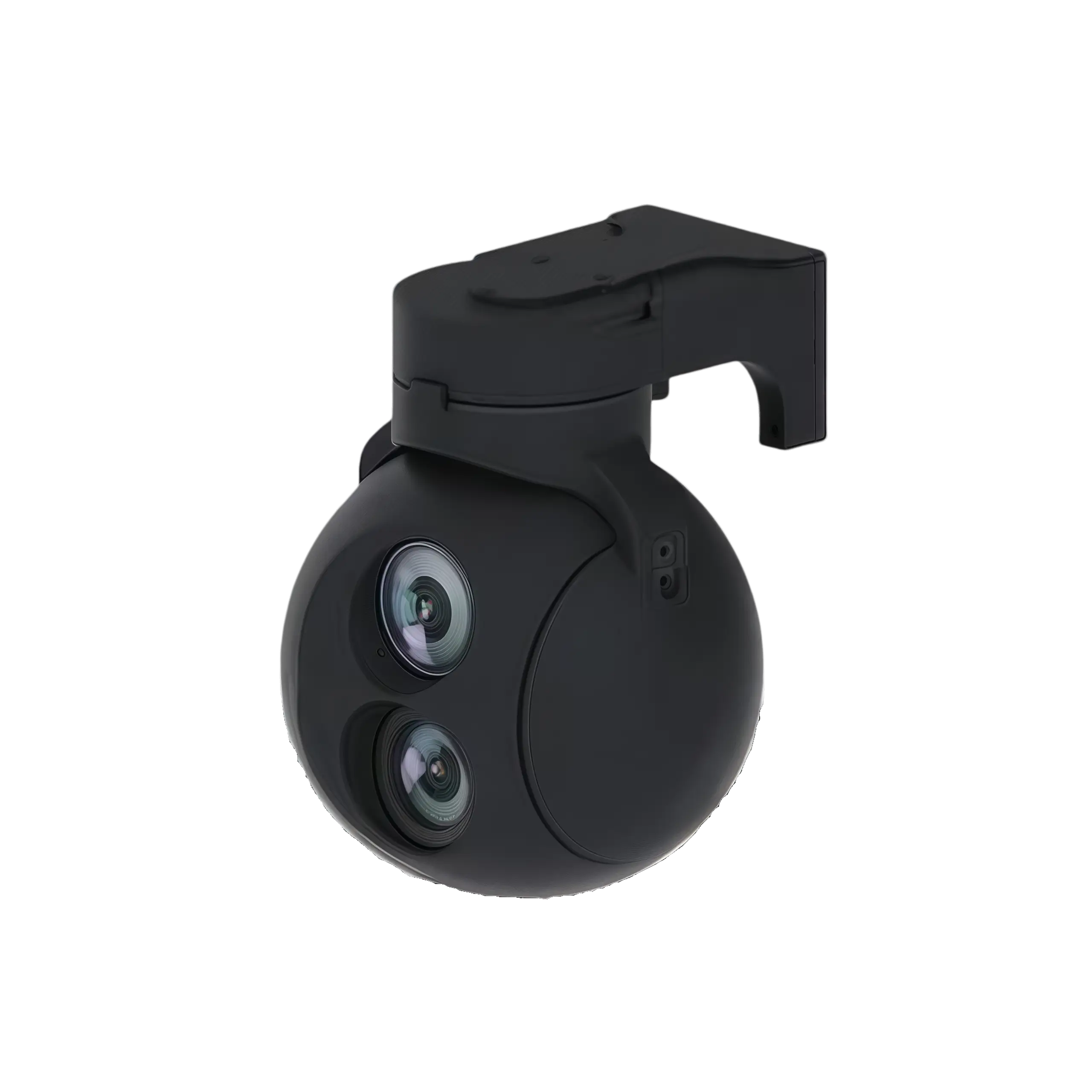
NTPOD80A Two-Axis Gyro-Stabilized Electro-Optical System
The NTPOD80A isolates structural dynamics via an integrated two-axis dual-frame mechanism to deliver precision airborne tracking assets within a sub-240g physical profile. Designed for long-endurance utility surveys, it pairs dual fixed-focus optical tracks with integrated real-time embedded computing nodes to output high-resolution target coordinates without flight endurance degradation.
- Dual Fixed-Focus Optics: Dedicated 7.2mm wide-field and 25mm narrow-field 1080p sensors running at 60fps.
- Stabilized Accuracy Envelope: High-precision mechanical gimbal returning a 0.1mrad stabilization baseline.
- Catapult Shock Resilience: Capped at 240g structural mass with tested 400g launch shock survivability.
- Industrial Control Core: RS232 serial telemetry routing synchronized over dynamic wide-voltage DC 12V to 28V buses.
NTPOD80A Sub-240g Dual Fixed-Focus Gyro-Stabilized Electro-Optical System Overview
Long-endurance industrial airframes demand ultra-lightweight instrumentation vectors that mitigate high-frequency airframe harmonics without penalizing battery efficiency thresholds. The Gyro-Stabilized Electro-Optical System counteracts the payload-to-weight limitations of compact multi-rotor and fixed-wing platforms by packing an active dual-sensor optical core into a ruggedized sub-240g enclosure. Controlled via continuous internal stabilization loops, the active frame-within-a-frame tracking system achieves an active mechanical stabilization threshold of 0.1mrad, isolating platform wind shear during corridor mapping, critical utility infrastructure auditing, and linear asset surveys. This design relies on dual high-speed 1920×1080 resolution sensors operating at 60fps, ensuring that high-velocity inspection runs retain frame-by-frame structural clarity under complex ambient conditions.
For tier-1 system integrators and airframe developers, our Gyro-Stabilized Electro-Optical System presents a turnkey optomechanical footprint with an array of hardware deployment pathways. The digital architecture delivers low-latency network video streaming data concurrently with embedded AI target tracking vectors that handle multi-class vehicle and human classification loops at tracking velocities up to 40°/s. Hardware interface routing is streamlined through an integrated J30 communication hub, giving developers direct serial RS232 telemetry access and simplified power routing. This comprehensive interface shielding ensures complete electromagnetic compatibility across automated inspection fleets, establishing the system as an adaptable, production-ready node across search and rescue operations and hazardous corridor monitoring networks.
NTPOD80A Sub-240g Dual-Channel Gyro-Stabilized Electro-Optical System Primary Functions
- Dual Fixed-Focus Baselines: Pairs a 7.2mm Wide Field of View channel (42.2°×24.5° FOV) with a 25mm Narrow Field of View channel (12.71°×7.1° FOV) to eliminate mechanical lens movement wear.
- High-Rate Video Pipeline: Outputs high-definition 1920×1080 streams at 60fps across both independent optical tracking paths via a unified network interface.
- 0.1mrad Stabilization Envelope: Combines a dual-axis mechanical gimbal assembly with advanced servo-assisted image stabilization algorithms to maintain a 0.1mrad tracking accuracy index.
- 400g Catapult Shock Threshold: Engineered with a structural housing built to withstand launch shocks up to 400g, ensuring compatibility with catapult-launched drone platforms.
- High-Velocity Object Tracking: Drives localized image parsing loops to secure target acquisition and maintain automated locks at angular tracking speeds up to 40°/s.
- EMC-Shielded Power Architecture: Houses wide-voltage DC 12V to 28V power converters inside a fully shielded metal shell to suppress RF emission spikes.
- Wide-Envelope Angular Travel: Enables flexible tracking profiles with wide angular travel ranges spanning -100° to +40° in pitch and -110° to +110° in yaw.
- Real-Time Target Positioning: Computes real-time target position metrics by aligning internal frame coordinates with localized tracking telemetry lines.
NTPOD80A Gyro-Stabilized Electro-Optical System Full Specifications
| System Electrical & Physical Parameters | |
| Operational Voltage Input | DC 12V-28V |
| Power Dissipation | Average≤10W, Peak≤20W |
| Structural Mass | ≤240g |
| Physical Dimensions | 63mm×76mm×83mm |
| Electromagnetic Compliance | Fully Shielded Metal Enclosure / EMC Compliant |
| Gimbal Stabilization Assembly | |
| Pitch Axis Range | -100° to +40° |
| Yaw Axis Range | -110° to +110° |
| Stable Accuracy Index | 0.1mrad (1°/2Hz) (1σ) |
| Maximum Angular Acceleration | ≥100°/s |
| Angular Position Accuracy | ≤0.3° |
| Mechanical Structural Resilience | Launch Shock Survival ≥400g |
| Dual Visible Light Sensor Architecture | |
| WFOV Sensor Resolution & Frame Rate | 1920×1080 at 60fps |
| WFOV Optical Lens Focal Length | 7.2mm |
| WFOV Field Angle (FOV) | 42.2°×24.5° |
| NFOV Sensor Resolution & Frame Rate | 1920×1080 at 60fps |
| NFOV Optical Lens Focal Length | 25mm |
| NFOV Field Angle (FOV) | 12.71°×7.1° |
| Edge AI & Interfaces | |
| Tracking Velocity Threshold | ≥40°/s |
| Video Stream Delivery Protocol | Network Output |
| Control Protocol Interface | RS232 Telemetry Command Line |
| Thermal Operational Constraints | -40°C to +60°C |
| Storage Thermal Threshold | -50°C to +70°C |
NTPOD80A 63mm×76mm×83mm Envelope Mechanical Dimensions & Structural Profile
The mechanical drawing details the precise spatial layout and structural envelope of the NTPOD80A micro payload. Built with an ultra-compact outer geometry to minimize aerodynamic drag coefficients, the upper interface features standard mounting arrays for secure deployment onto lightweight airframes.
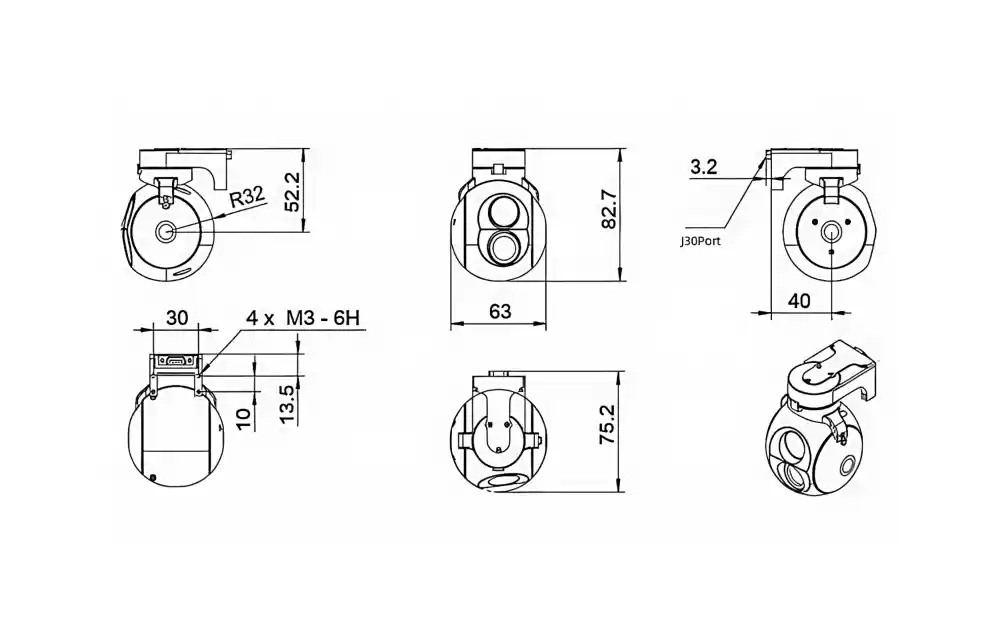
Structural Dimensions Profile: Outer envelope limits measure 63mm in width by 76mm in depth, with a total vertical chassis axis height of 83mm from the mounting adapter base to the lower sphere limit.
- The micro payload features a minimized 63mm wide frontal cross-section profile to reduce crosswind influence.
- The upper base interface integrates a 4×M3 – 6H thread mounting pattern spaced across a 30mm layout.
- The electronic interconnect routing routes system lines directly out of a dedicated J30 port interface.
Industrial Application Scenarios & Field Deployments
- Critical Infrastructure Inspection & Utility Auditing: Deploys on lightweight automated airframes to map cross-country power distribution networks, isolating line anomalies and detecting vegetation encroachment without entering high-voltage interference zones.
- Corridor Mapping & Pipeline Surveys: Integrates onto long-range commercial fixed-wing platforms to trace hundreds of kilometers of oil, gas, and water pipelines, tracking structural leaks or ground deformation via concurrent 1080p network streams.
- Search and Rescue & Emergency Coordination: Provides airborne disaster response teams with a continuous 60fps tracking view to identify missing assets, coordinate search vectors over rugged terrain, and stream live coordinate overlays back to ground base hubs.
- Maritime Observation & Marine Conservation Surveys: Mounts inside protective non-conductive dome housings on commercial environmental tracking airframes to scan open water navigation channels, trace offshore industrial oil spills, and monitor marine conservation regions using dual fixed-focus optical baselines.
Thermal Night Vision & Spectrum Expansion Options: This sub-240g dual visible-light sensor platform routes system connections directly out of a standardized micro-connector port interface. For operating profiles requiring integrated daytime tracking matched alongside an uncooled long-wave infrared thermal sensor within a similar micro-envelope, review the technical parameters of our NTPOD80 Industrial-Grade Micro Pod (weighing ≤280g) to streamline all-weather commercial workflows.
SWaP-C Multi-Axis Stabilization Alternatives: If your lightweight industrial airframe configuration demands active 3-axis gyro-stabilization alongside continuous digital zoom scaling under strict mass containment restrictions, cross-reference the comprehensive sensor engineering matrices of our ultra-light NTPOD64 Three-Axis Gyro-Stabilized Micro Pod to optimize dynamic aerial observation link efficiency.